No travel guide makes you fall in love with a destination, but the wrong practical details can make you miserable. China is a thoroughly modern country with world-class infrastructure, yet certain daily realities — the water, the air, the toilets, the power outlets — differ enough from Western norms that first-time visitors are caught off guard. None of these things are dangerous or insurmountable. They are simply different, and knowing the difference in advance means you spend your energy on the Great Wall and the dumplings rather than on a preventable stomach ache or a dead phone battery.
This guide covers the small, unglamorous practicalities that collectively determine whether your trip feels smooth or friction-filled. Master these five areas and you'll navigate daily life in China with the quiet confidence of someone who's been here before.
Tap Water: Don't Drink It. Anywhere.
Let's be unequivocal: do not drink tap water in China. Not in Beijing, not in Shanghai, not in a five-star hotel, not in a rural guesthouse. Water treatment standards vary significantly by city, and even where municipal treatment is adequate, aging pipes in older buildings introduce uncertainty that no traveler needs to gamble with. Locals don't drink from the tap either — they boil it, filter it, or buy bottled water. Follow their lead.
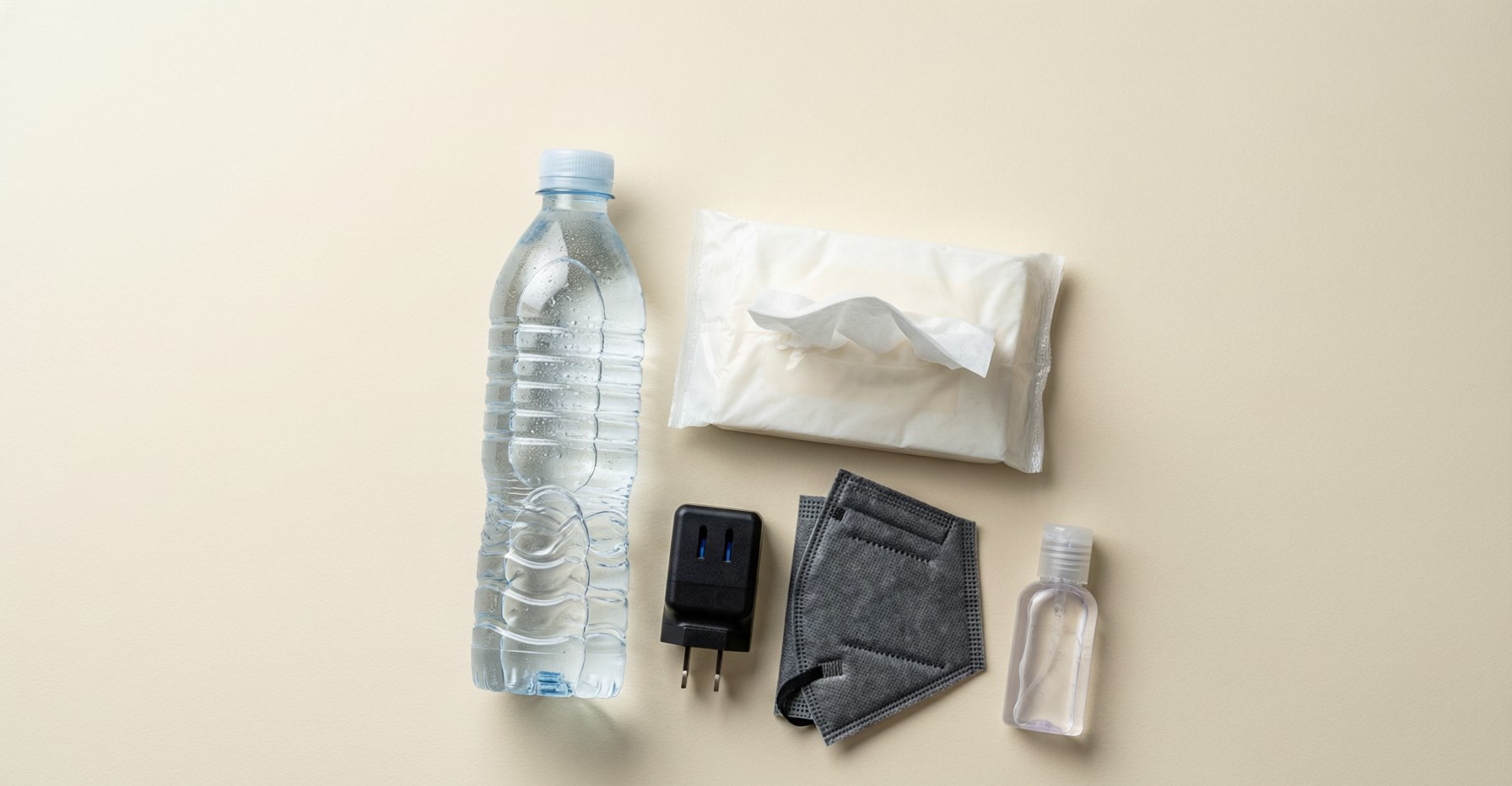
Bottled water (Kuàngquán Shuǐ, 矿泉水) is available literally everywhere: convenience stores, street kiosks, train stations, hotel minibars. A 550ml bottle of Nongfu Spring or C'estbon costs around 2 RMB (roughly $0.30). Buy in bulk at any supermarket for even less. Every hotel room provides a kettle — use it to boil water for tea, instant coffee, or simply to have safe hot water. Many travelers also carry a filtered water bottle (brands like LifeStraw or Grayl work well), which reduces plastic waste on longer trips.
Brushing your teeth with tap water is generally fine in major cities; the small amount ingested is unlikely to cause problems for most people. If you have a sensitive stomach, use bottled water for brushing too. Avoid ice in drinks from street vendors unless you can confirm it's made from purified water — in hotels and established restaurants, ice is almost always safe.
Air Quality: Better Than You Think, But Check Daily
If your mental image of Chinese air quality comes from the "airpocalypse" headlines of 2013–2015, update it. China has invested enormously in clean energy and industrial emissions controls since then, and the improvement is dramatic. That said, air quality still varies by city and season, and it pays to check before you plan a full day outdoors.
Regional patterns: Southern cities like Shenzhen, Kunming, and Haikou consistently enjoy clean air year-round, thanks to coastal breezes, lower industrial density, and milder heating needs. Beijing and northern industrial cities can still see hazy days in winter, when coal heating and weather inversions trap pollutants. Spring occasionally brings sandstorm haze to the north from the Gobi Desert.
Monitoring and response: Check the Air Quality Index (AQI) daily using apps like AirVisual or the built-in weather apps on Chinese phones (which display AQI prominently). When AQI exceeds 150, sensitive individuals — those with asthma, respiratory conditions, or young children — should limit prolonged outdoor exertion. On genuinely bad days (AQI above 200, increasingly rare), consider indoor activities: museums, malls, tea houses.
Masks: N95 masks are available at any pharmacy (Yàofáng, 药房) for roughly 5–15 RMB each. They're also sold in convenience stores during hazy spells. A properly fitted N95 filters particulate matter effectively. Many locals wear them on high-AQI days as routine precaution rather than panic response — adopt the same pragmatic attitude.
Toilets: The Squat Toilet Reality
We'll be direct because euphemism helps no one: you will encounter squat toilets in China. They are common in public restrooms, train stations, budget restaurants, older buildings, parks, and highway service areas. They are less common — though not absent — in hotels, shopping malls, newer restaurants, and upscale establishments, where Western-style sitting toilets are standard.
Think of it as a spectrum, not a binary. A five-star hotel in Shanghai will have a pristine Western toilet, possibly with a bidet function (smart toilet seats, or Zhìnéng Mǎtǒng, 智能马桶, are increasingly common in upscale venues). A public restroom at a train station will likely have squat stalls. A mid-range restaurant might have either. The further you go from the tourist track, the more squat toilets dominate.
Practical advice that will save you:
Always carry a small pack of tissues. Many public restrooms do not provide toilet paper — not because of neglect, but because it's simply not the norm. A pocket pack of tissues (available at every convenience store for 1–2 RMB) is as essential as your phone. Carry a small bottle of hand sanitizer as well; not all public restrooms have soap, and some lack running water entirely. None of this is unpleasant once you're prepared — it simply requires a small adjustment to your daily carry.
Practical advice: Before entering any attraction, museum, or long transit journey, use the restroom at your hotel or at the venue entrance. Public restrooms inside major sites can have long queues during peak hours. And remember: tissues and sanitizer in your bag, every single day, no exceptions. This one habit eliminates most toilet-related anxiety entirely.
Power and Adapters: 220V and a Surprising Outlet Variety
China uses 220V at 50Hz — the same voltage as Europe, Australia, and most of Asia, but double the 110V used in North America and Japan. The good news: virtually all modern phone chargers, laptop power bricks, and camera battery chargers are dual-voltage (marked "Input: 100–240V, 50/60Hz" on the label). Check yours before you go, but almost certainly you do not need a voltage converter. You only need the right physical plug shape.
Outlet types vary — sometimes on the same wall plate. You'll encounter Type A (two flat parallel pins, as in the US and Japan), Type C (two round pins, as in Europe), and Type I (three angled pins, as in Australia and New Zealand). Many Chinese wall outlets are designed to accept all three in a single plate, with the Type A/C slots on top and the Type I slots below. Most modern hotels have universal outlets that accommodate any of these without an adapter.
Where you might still need an adapter: Older buildings, train stations, some cafes, and budget accommodations may have only one outlet type — often Type I (three angled pins) or Type A (two flat pins). A universal travel adapter (the kind with interchangeable heads or a sliding multi-standard design) costs 50–100 RMB and weighs almost nothing. Pack one. It's the kind of item you'll be grateful for at 11 PM in a small-town guesthouse when your phone is at 4% and the only outlet takes Australian pins.
Power banks: Bring a portable charger (Chōngdiàn Bǎo, 充电宝). You'll be using your phone constantly — for navigation, translation, payments, metro codes, restaurant reviews — and battery drain is real. Power banks up to 20,000 mAh are allowed in carry-on luggage on domestic flights (they must go in your cabin bag, never checked luggage). Many trains and metros have USB charging ports, but they're not guaranteed on every seat.
Medicine and Pharmacies
Pharmacies (Yàofáng, 药房) are abundant in every Chinese city, typically marked with a green cross sign. They stock common over-the-counter medications: ibuprofen (Fēn Bìdé, 芬必得), paracetamol (Duìyǐxiān'ānjīfēn, 对乙酰氨基酚), antihistamines, anti-diarrheal medication (like Smecta or Montmorillonite powder, Méngtuōshí Sǎn, 蒙脱石散), and basic first-aid supplies. Many also carry traditional Chinese medicine remedies alongside Western pharmaceuticals.
That said, pack a small personal medicine kit before you leave home: your preferred painkiller, stomach remedies, any prescription medications (with a copy of the prescription), blister plasters, and rehydration salts. Brand names differ in China, and while pharmacists are knowledgeable, explaining symptoms across a language barrier at midnight is not how you want to spend an evening. For anything beyond minor ailments, major cities have international clinics (like United Family or Parkway) with English-speaking staff, though they are expensive — travel insurance that covers medical visits is strongly recommended.
Staying Well on Long Travel Days
China's scale means long travel days are inevitable — four-hour train rides, full-day treks, early-morning flights. A few habits keep you functioning at full capacity:
Hydrate aggressively. The combination of air-conditioned trains, dry northern air, and constant walking depletes you faster than you'd expect. Buy water at every station stop. The hot-water dispensers found in every train station and on every high-speed train (look for the red-tap urns) are free and safe — they're how locals fill their thermoses for tea. Bring an empty bottle and refill throughout the day.
Eat on a rhythm. Chinese meal times are earlier than many Western travelers expect: lunch peaks at 11:30–12:30, dinner at 17:30–19:00. Restaurants empty quickly after these windows. If you're between cities during off-hours, convenience stores (7-Eleven, FamilyMart, Lawson) sell fresh rice balls, sandwiches, fruit, and yogurt. Train station food courts and onboard trolleys keep you fed in transit, though quality varies.
Rest your feet. You will walk more in China than you typically do at home — 15,000 to 25,000 steps on a sightseeing day is normal. Comfortable broken-in shoes are non-negotiable. Build one slower day into any week-long itinerary: a morning at a tea house, an afternoon in a park, an evening hot-pot dinner where the only walking is to the restaurant. Your body will thank you, and you'll actually absorb more of what you're seeing.