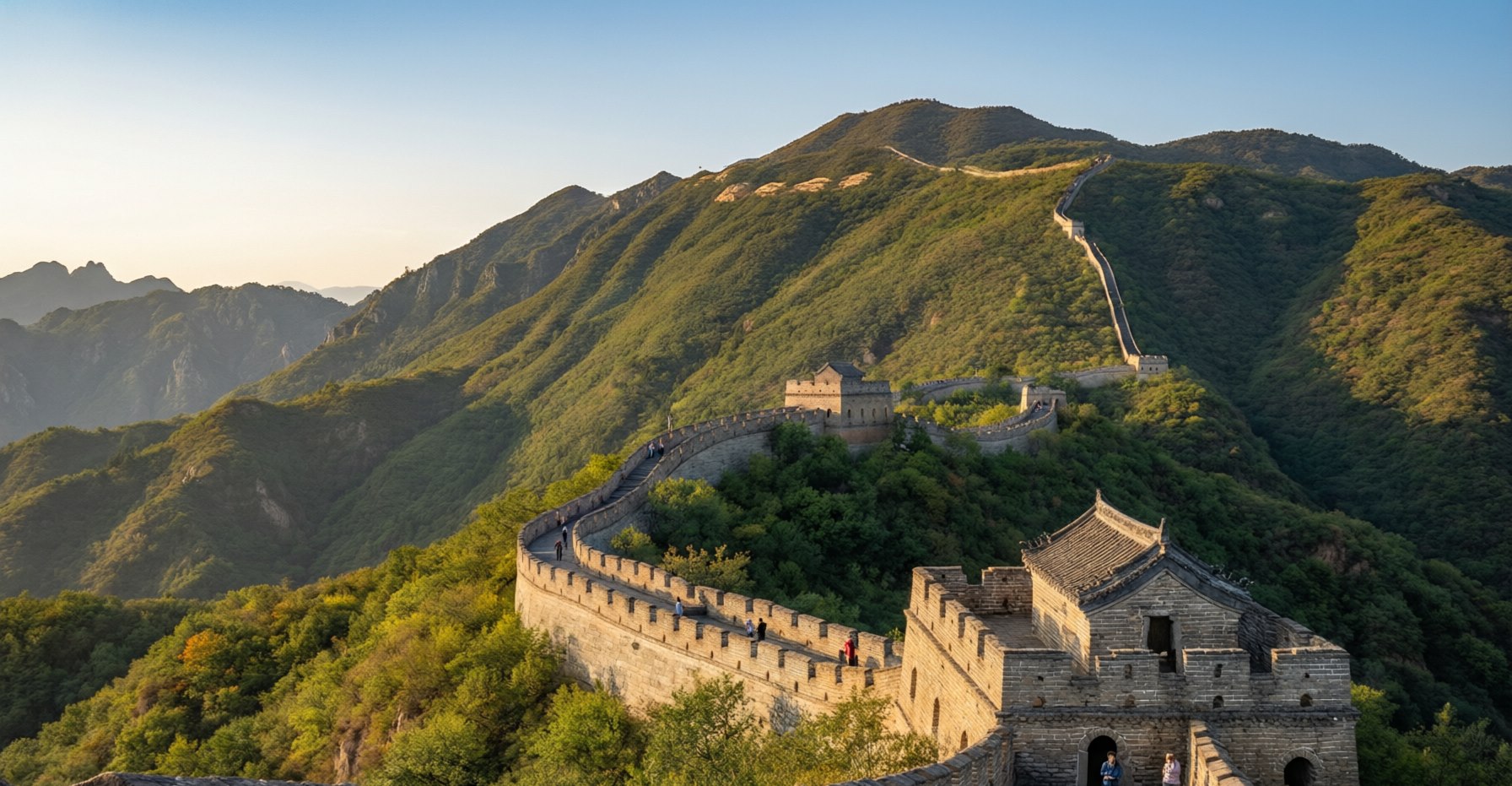
China spans five time zones, stretches from subarctic Manchuria to tropical Hainan, and encompasses deserts, rainforests, alpine plateaus, and megacities. There is no single "best time" to visit the whole country — but there is emphatically a worst time, and getting this wrong can turn a dream trip into an endurance test. When you visit matters as much as where you go. Choose well, and you'll share the Great Wall with a handful of fellow travelers under crystalline autumn skies. Choose poorly, and you'll spend your holiday shoulder-to-shoulder with 700 million other people, paying triple for a hotel room you booked too late.
This guide lays out the seasonal logic region by region, flags the dates to avoid at all costs, and identifies the shoulder-season windows where weather, crowds, and prices all align in your favor.
The Two Dates to Avoid: Golden Week and Chinese New Year
Golden Week (Guóqìng Jié, 国庆节), October 1–7. This is China's National Day holiday, and it transforms the entire country into a single, surging crowd. Over 700 million domestic trips occur during this one week. Major attractions — the Forbidden City, the Great Wall at Badaling, the Terracotta Warriors — hit capacity and physically close their gates. Train tickets vanish within minutes of release. Hotel prices triple, sometimes quadruple, in tourist cities. Highway traffic jams stretch for dozens of kilometers. The experience is miserable for everyone, locals included, and there is no workaround short of staying home.
Chinese New Year travel rush (Chūnyùn, 春运), roughly late January through February. This is the world's largest annual human migration: approximately 3 billion passenger trips compressed into 40 days as hundreds of millions of workers, students, and families return to their hometowns. Transport infrastructure is overwhelmed beyond anything a Western traveler has likely experienced. Trains and flights sell out days or weeks ahead. Many restaurants, shops, and smaller attractions close for one to two weeks as staff go home. Cities like Beijing and Shanghai feel oddly hollowed out while provincial transport hubs buckle under the pressure. Unless you have a specific invitation to experience a Chinese family's New Year celebration firsthand, this is not the window for a sightseeing trip.
Practical advice: If your travel dates are flexible, treat Golden Week and Chūnyùn as hard no-go zones. If they are not flexible — perhaps you only get one annual leave window — shift your itinerary toward lesser-known destinations, secondary cities, or nature areas that don't have hard capacity caps. And book every single element of your trip the moment reservations open.
Best Seasons by Region
Northern China (Beijing, Xi'an, Harbin): September–October. Early autumn delivers mild temperatures (15–25°C), low humidity, and the clearest skies of the year. The summer heat and occasional sandstorms of spring are behind you, and the bitter winter cold hasn't arrived. The Great Wall in late September, with golden light on green ridgelines and manageable visitor numbers, is the postcard version for good reason. Spring (April–May) is a decent alternative, though Beijing can still catch sandstorms blown in from the Gobi Desert, and temperatures swing unpredictably.
Southern China (Guangzhou, Shenzhen, Guilin): October–December. The south endures a long, humid, typhoon-prone summer from June through September. Once October arrives, the humidity drops, the rains retreat, and temperatures settle into a comfortable 20–28°C range. Guilin's karst landscape is especially photogenic in autumn light. December and January remain mild compared to the north, making the south a good winter escape — though you'll share it with domestic tourists fleeing northern cold.
Southwest China (Yunnan, Guizhou, Sichuan): March–June and September–November. These provinces are defined by altitude as much as latitude. Kunming, at 1,900 meters, is called the "Spring City" (Chūnchéng, 春城) for its year-round mildness. But mountain areas — Tiger Leaping Gorge, the Tibetan fringes of northwest Yunnan, western Sichuan — see heavy rain in summer that can wash out roads and obscure views. Spring brings wildflowers and clear trekking conditions; autumn offers stable weather and spectacular foliage.
Tibet and western China: May–October. High-altitude passes are snowed in for much of the year, and oxygen levels are marginally better in warmer months when vegetation is active. July and August are peak season in Lhasa and along the Qinghai-Tibet railway. May–June and September–October offer quieter conditions with still-accessible routes.
Harbin's Ice Festival: January–February. The one glorious exception to the "avoid winter" rule. The Harbin International Ice and Snow Sculpture Festival (Bīngxuě Jié, 冰雪节) transforms the city into a frozen wonderland of illuminated sculptures, some the size of apartment buildings. Temperatures plunge to −30°C. That's not a drawback — it's the entire point. Dress in serious layers, embrace the cold, and you'll witness something genuinely unrepeatable anywhere else.
A Quick Month-by-Month Glance
January–February: Deep winter in the north; Harbin Ice Festival in full swing; Chinese New Year travel chaos nationwide. Southern cities remain mild. Avoid unless you're specifically chasing ice sculptures or a family New Year experience.
March–April: Spring awakening. Cherry blossoms in Wuhan and Nanjing, rapeseed flowers in Yunnan and Guizhou, warming temperatures across the south. Beijing may see sandstorms. Crowds are still manageable before the May Day holiday rush.
May–June: Warm and increasingly humid in the south; ideal in the southwest highlands and the north. The May Day holiday (May 1–5) brings a smaller but still significant domestic travel surge — book ahead. Summer rains begin in the Yangtze region by June.
July–August: Peak summer heat and humidity across most of eastern China; typhoon season along the southeast coast. School holidays mean maximum family tourism. Tibet and high-altitude west are at their most accessible. Not ideal for Beijing, Shanghai, or Guilin unless you tolerate heat well.
September–October: The golden window. Clear skies, comfortable temperatures, lower humidity. Mid-September through late October (excluding Golden Week itself) is arguably the single best period for a first visit covering multiple regions.
November–December: Autumn color fades; the north turns cold. The south remains pleasant. Crowds thin dramatically after Golden Week. A solid choice for budget travelers willing to layer up in Beijing and Xi'an.
Timing Your Trip Around Festivals
China's traditional festivals — Mid-Autumn Festival (Zhōngqiū Jié, 中秋节), Dragon Boat Festival (Duānwǔ Jié, 端午节), Lantern Festival (Yuánxiāo Jié, 元宵节) — are culturally rich and genuinely rewarding to experience. Mooncakes, dragon boat races, lantern displays: these are the living texture of Chinese civilization. However, they are also public holidays, and public holidays mean crowds. The Mid-Autumn Festival often falls close to Golden Week, sometimes merging into an extended break that compounds the travel crush.
The strategic approach: arrive a few days before a festival to enjoy the preparations and atmosphere, then move on before the holiday itself triggers mass travel. Alternatively, embrace the festival in a smaller city where crowds are manageable and traditions feel more intimate than in tourist-saturated Beijing or Shanghai.
The Shoulder-Season Sweet Spots
If you want one simple rule: mid-March through April, or mid-October through November. These two windows offer the best combination of pleasant weather, manageable crowds, and reasonable prices across most of the country. Hotels haven't peaked, flights are cheaper, attractions aren't at capacity, and the light is good for photography. You sacrifice nothing meaningful except the certainty of perfect weather every single day — and even that holds more often than not.
One final timing consideration that applies year-round: weekdays always beat weekends. The Forbidden City caps daily visitors at 80,000 and regularly sells out on weekends. The Great Wall at Mutianyu, the Bund in Shanghai, West Lake in Hangzhou — all swell with domestic weekenders on Saturdays and Sundays. If your itinerary allows any flexibility, schedule marquee attractions for Tuesday through Thursday. The difference in crowd density is not subtle; it's the difference between a contemplative morning on the Wall and a slow shuffle through a human river.