There is a moment, each winter, when the entire nation of China exhales as one. Offices empty. Factories fall silent. The great engines of commerce and industry — the ceaseless, world-building momentum of 1.4 billion lives — pause, and turn, like a compass needle finding north, toward a single fixed point: home. The Spring Festival, 春节 (Chūnjié), is not merely the most important holiday in the Chinese calendar. It is the gravitational center of an entire civilization, the week when all of life's scattered threads are drawn back to the one table that matters most. It is the largest annual human migration on Earth, the most elaborate feast, the loudest night, the reddest season. It is the sound of a civilization saying, in unison: we are still here, we are together, and the year turns again.
When Is Spring Festival?
Unlike the Gregorian New Year, which arrives on a fixed date, Spring Festival follows the ancient Chinese lunisolar calendar. It falls on the first day of the first lunar month — a date that drifts across the Western calendar between January 21 and February 20, governed by the phases of the moon and the solar terms that have guided Chinese agriculture for millennia. The celebration itself stretches far beyond a single day. Officially, the public holiday spans seven days, but the festival season encompasses a full fifteen days, from New Year's Eve through the Lantern Festival on the fifteenth night, when the first full moon of the new year rises full and golden above a land still fragrant with gunpowder and dumpling steam.
Each year is governed by the Chinese zodiac, a twelve-animal cycle — Rat, Ox, Tiger, Rabbit, Dragon, Snake, Horse, Goat, Monkey, Rooster, Dog, Pig — that has assigned character and fortune to every Chinese child for over two thousand years. The year 2026 belongs to the Horse, an animal associated with vitality, independence, and unstoppable forward motion. To be born in a Horse year is to inherit a legacy of restless energy and noble spirit, and the decorations, greetings, and well-wishes of that year will gallop with equine imagery from every doorway and screen.
The Legend of Nian
Every child in China knows the story, told in hushed voices by grandmothers and illustrated in picture books worn soft at the edges. In the time before memory, there lived a beast called Nian — a monstrous creature with the body of an ox, the head of a lion, and a hunger that could swallow a village whole. For most of the year, Nian slumbered beneath the sea or deep within the mountains. But on the last night of winter, when the cold pressed hardest and the darkness stretched longest, it rose. It came snarling through the villages, devouring livestock, trampling crops, and — when its appetite turned cruel — carrying off children into the night.
For generations, the people fled. They barred their doors, packed their families into the hills, and prayed for dawn. Then one year, an old sage appeared — white-bearded, robed in red, utterly unafraid. He refused to flee. When Nian came howling through the empty streets, the old man stood in the village square and unleashed three weapons: he pasted sheets of blazing red paper across every door, he set alight bundles of dry bamboo that cracked and exploded like thunder, and he lit candles in every window until the night blazed as bright as noon. Nian shrieked. It recoiled. It fled back into the darkness and was never seen again.
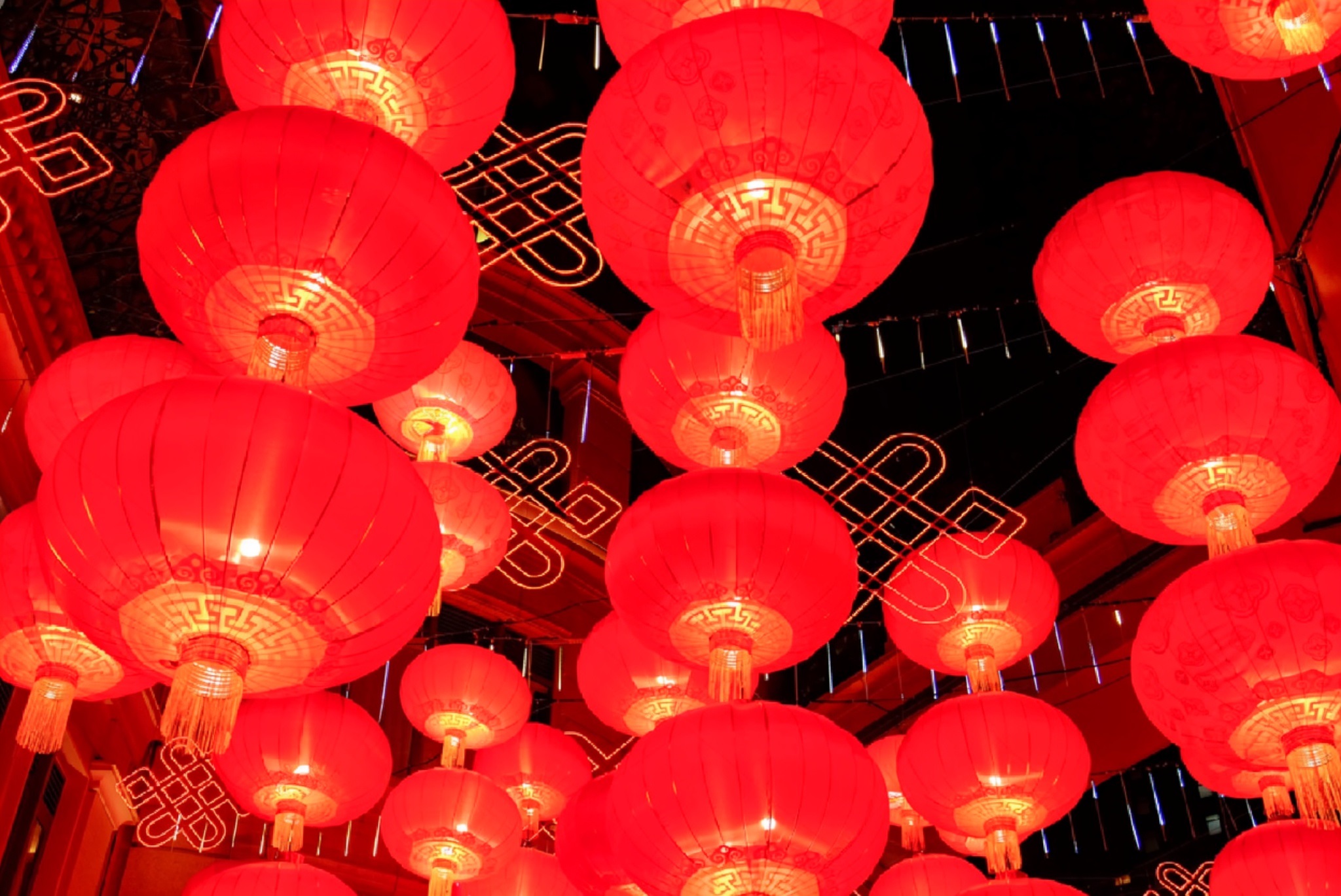
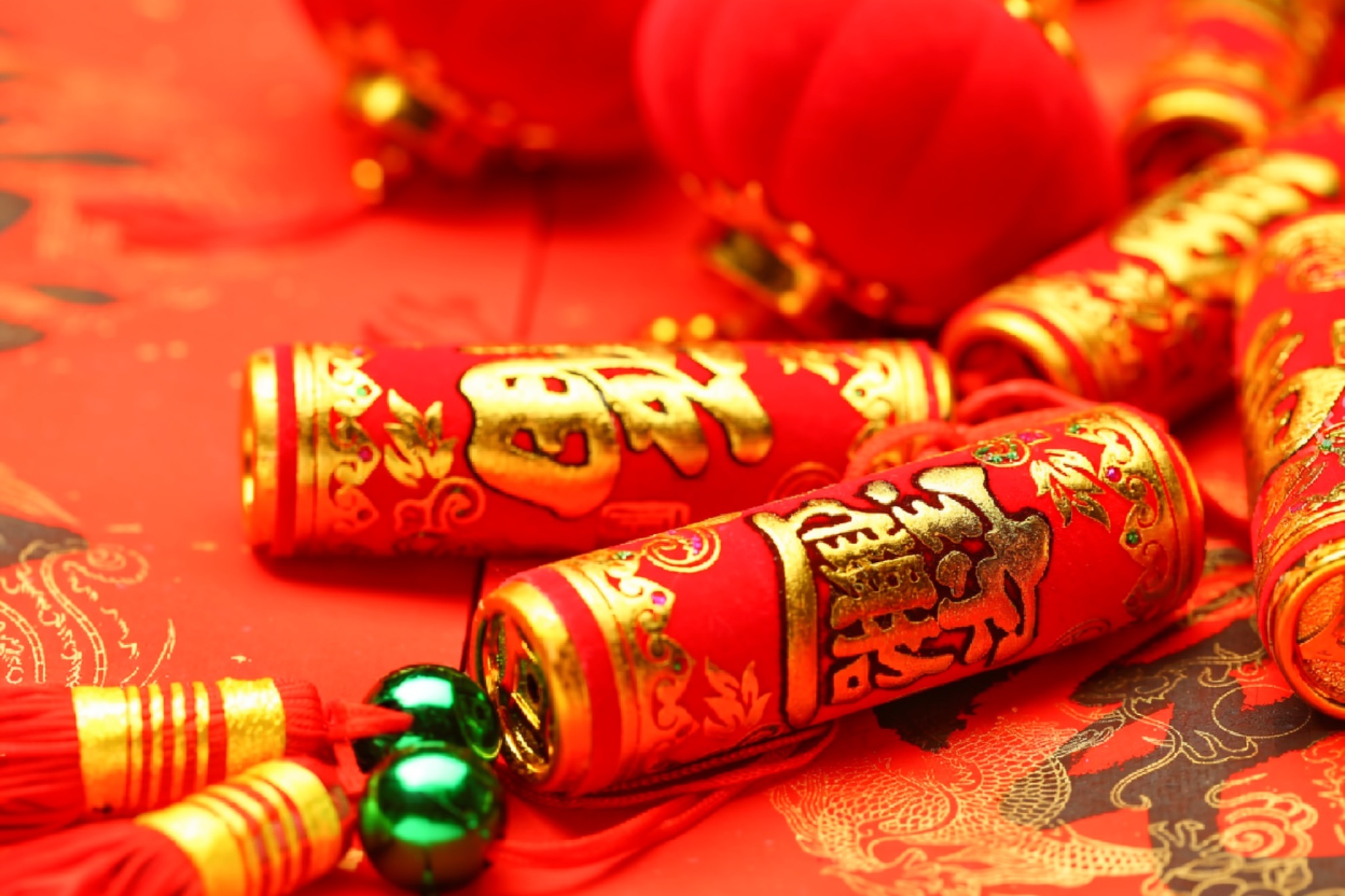
The beast had three fears: the color red, loud noise, and bright light. Every signature element of Spring Festival descends from that primordial night of victory. The red lanterns, the firecrackers, the all-night vigils blazing with light — these are not mere decoration. They are armor. They are the weapons of a people who refused to be devoured by the dark. The very word for "year" in Chinese — 年 (nián) — is the beast's name. To say "Happy New Year" (过年, guònián) is literally to say "survive Nian." Every Spring Festival is a reenactment of that first triumph, a civilization remembering, with joy and noise, that it conquered fear itself.
Historical Origins: Three Thousand Years of Celebration
Beneath the legend lies archaeology. The earliest evidence of year-end celebration in China appears on Shang Dynasty oracle bones, dating to roughly 1600–1046 BCE, where diviners recorded sacrificial rituals performed at the turn of the year — offerings of grain and animals to ancestral spirits and celestial gods, petitions for harvest and protection in the cycle to come. These were solemn affairs, conducted by kings and priests, but they established the essential grammar of the festival: the marking of time's passage, the honoring of those who came before, the communal plea for prosperity.
By the Han Dynasty (206 BCE–220 CE), the celebration had crystallized into something recognizable. The first day of the first lunar month was formally designated as the new year, and the rituals expanded beyond the court into every household. Families gathered, ancestors were honored, and the practice of staying awake through the night — shousui, "guarding the year" — took root. The Tang and Song dynasties (618–1279 CE) transformed the festival into a golden age of public celebration. Poetry from this era overflows with images of lantern-lit streets, wine-soaked banquets, and fireworks painting the sky. The Song capital of Kaifeng hosted week-long festivities that drew hundreds of thousands, with acrobats, storytellers, and food vendors transforming the city into a carnival. What began as royal ritual had become, irrevocably, the people's festival.
The Great Migration: Chunyun
To understand Spring Festival, one must first understand chunyun — 春运, the Spring Festival travel rush. Over a forty-day period surrounding the holiday, China's transportation network carries approximately three billion passenger journeys. Three billion. It is a number that defies comprehension, a logistical undertaking without parallel in human history. High-speed trains streak across the continent at 350 kilometers per hour, their carriages packed with families hauling suitcases and gift boxes. Airports swell beyond capacity. Highways become rivers of taillights stretching to the horizon.
But the statistics, staggering as they are, miss the human truth. Chunyun is not merely transportation. It is pilgrimage. In the motorcycle brigades of Guangdong, where hundreds of thousands of migrant workers ride two-up through winter rain for days to reach villages in Guangxi and Guizhou, there is a determination that no train schedule can capture. In the faces of elderly parents waiting at rural bus stations, scanning every arriving vehicle for a familiar silhouette, there is an anxiety and a hope that no passenger count can measure. Chunyun reveals the deepest architecture of Chinese values: that no career, no city, no ambition outweighs the obligation to sit at your parents' table on New Year's Eve. The journey itself is an act of love.
"千里万里,回家过年。"
"A thousand miles, ten thousand miles — one must come home for the New Year." — Chinese proverb
The Reunion Dinner and Its Symbolic Language
The emotional apex of the entire festival is the reunion dinner — 年夜饭 (niányèfàn), the "year's eve meal." This is the meal that justifies the migration, the table around which three generations arrange themselves in an order as ancient as the dynasty that first formalized it. Every dish is chosen as much for its language as its flavor, for in Chinese culinary tradition, to eat is to speak in metaphor.
A whole fish is indispensable, steamed or braised and presented head-to-tail, because the word for fish (鱼, yú) is a homophone for surplus (余). To eat fish is to declare: may there be abundance beyond need in the year ahead. In northern China, the table centers on dumplings — 饺子 (jiǎozi) — their crescent shape a deliberate echo of ancient gold ingots, each one a small edible prayer for wealth. Families fold them together in the afternoon, pleating the dough while children press coins into secret ones, and whoever bites the coin will know fortune. In the south, the essential dish is niangao — 年糕, sticky rice cake — whose name puns on "year high" (年高), a wish for advancement, promotion, growth in all things. Tangyuan — 汤圆, glutinous rice balls in sweet broth — appear in southern households, their perfect roundness symbolizing family unity and completeness.
The regional variations are endless and fiercely defended. Cantonese tables groan under roast suckling pig and fat choy oyster stew. Sichuan families ladle fiery hotpot that fills the room with chili-scented steam. Shandong households present elaborate whole chickens and braised sea cucumber. But beneath the regional pride, the grammar is universal: the table must overflow, the dishes must speak, and no one eats alone.
Red Envelopes, Couplets, and the Architecture of Blessing
On New Year's Day and the days that follow, the social choreography of blessing unfolds. Elders present red envelopes — 红包 (hóngbāo) — to children and unmarried young people: crisp bills sealed in crimson packets, the color warding off evil while the money bestows tangible blessing. The amount matters — even numbers for joy, the digit eight for prosperity, never four, whose pronunciation echoes death. In the digital age, WeChat red envelopes have added a playful, communal dimension, with friends sending randomized amounts in group chats, tapping furiously at their screens as virtual coins scatter like confetti. Yet the physical envelope passed from grandparent to grandchild, pressed into small palms with a murmured blessing, retains an irreplaceable gravity that no algorithm can replicate.
Doorways throughout China are transformed by spring couplets — 春联 (chūnlián) — pairs of poetic lines written in black or gold ink on red paper, expressing wishes for prosperity, health, and harmony. A horizontal banner crowns the lintel. The couplets are calligraphy and prayer simultaneously, and their composition is an art form practiced by village elders and professional calligraphers alike. The character 福 (fú, fortune) is pasted upside-down on doors and windows, because "upside-down" (倒, dào) sounds like "arrive" (到) — the inverted fortune literally announces "fortune has arrived." Paper cuttings — intricate lacework of scissors-carved red paper depicting phoenixes, peonies, and zodiac animals — adorn windows, turning every home into a gallery of folk art. For one season, the entire visual landscape of China turns crimson, and the world is remade in the color of joy.
Dragon Dances, Temple Fairs, and Public Celebration
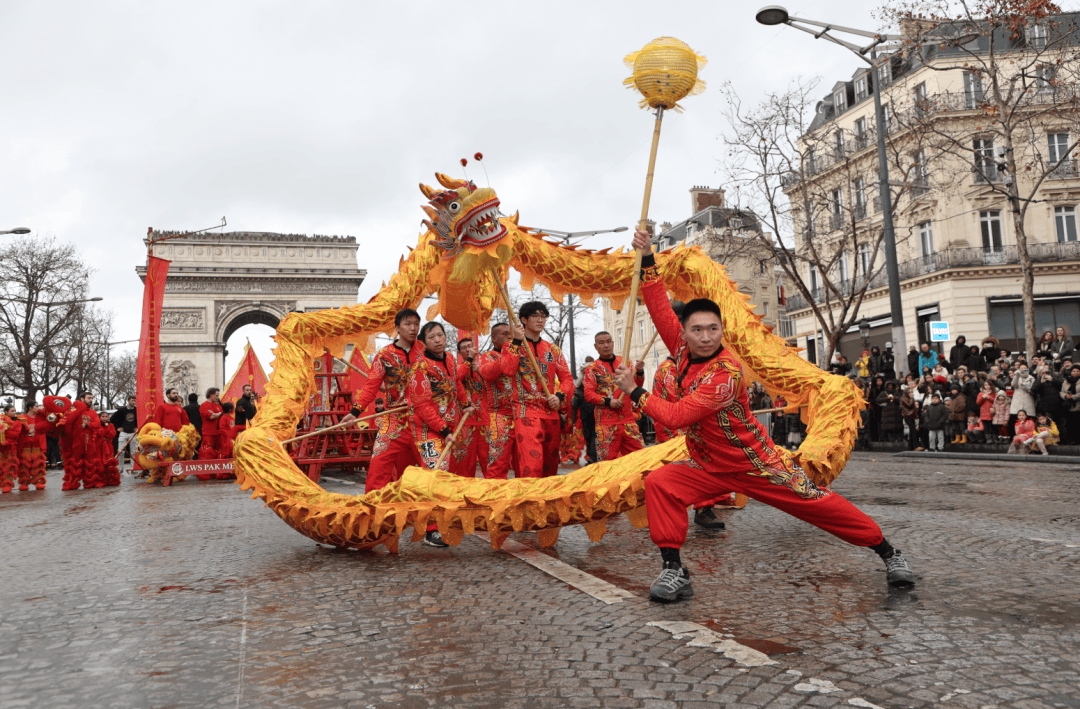
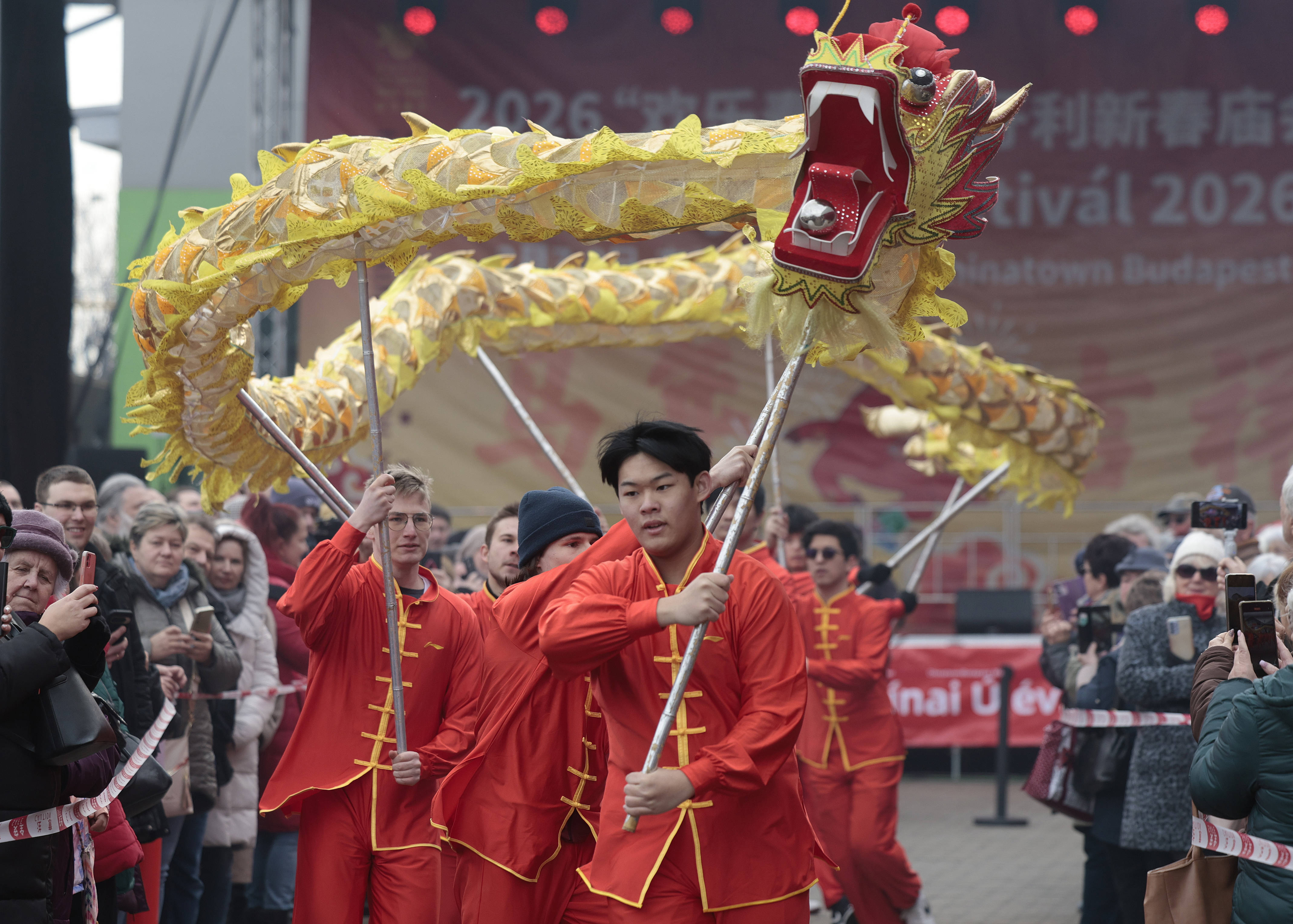
If the reunion dinner is Spring Festival's private heart, the public celebration is its thundering body. From the second day onward, the streets belong to spectacle. The dragon dance — a serpentine creation of silk, bamboo, and paint, sometimes stretching thirty meters — undulates through neighborhoods carried by a team of dancers whose coordination is itself a form of choreographed prayer. The dragon chases a flaming pearl, twists, coils, and rears, and wherever it passes, fortune follows. Lion dances, performed by pairs of acrobatic dancers inside ornate papier-mâché heads, leap onto tables and snatch lettuce bundles hung high — the word for lettuce (菜, cài) echoing "wealth" (财, cái) — showering onlookers with symbolic prosperity.
Temple fairs — 庙会 (miàohuì) — transform the grounds around Buddhist and Taoist temples into sprawling carnivals of folk culture. Here, sugar painters draw dragons and phoenixes in molten caramel. Dough sculptors pinch miniature warriors from colored paste. Shadow puppeteers enact tales from the Three Kingdoms behind backlit screens. Stilt walkers tower above the crowd. Yangge dancers — rows of women in silk sashes, fans flashing — ripple through the fairgrounds in synchronized joy. The air is thick with the smoke of grilled lamb skewers, the sweetness of candied hawthorn on sticks, and the percussive crack of firecrackers that never quite stops. The temple fair is democracy in festival form: sacred and profane, ancient and immediate, belonging to everyone.
The Lantern Festival: A Luminous Finale
On the fifteenth night, the festival exhales. The Lantern Festival — 元宵节 (Yuánxiāo Jié) — closes the Spring Festival season with a spectacle of quiet radiance. The first full moon of the new year rises, and across every city and village, lanterns ignite. Silk and paper, round and dragon-shaped, carried by children on sticks and strung across streets in rivers of amber and crimson light, they transform the winter dark into something tender and infinite.
Families eat yuanxiao or tangyuan — glutinous rice balls filled with black sesame, peanut, or red bean paste — their roundness a final echo of the completeness that began with the Eve dinner. Lantern riddles are written on paper and pasted to the lanterns themselves: puzzles of wordplay and allusion that draw crowds of solvers, children and scholars alike, into delighted argument. In ancient China, the Lantern Festival was the one night when young women could walk freely through the streets unchaperoned, and it became saturated with romantic possibility — a Chinese Valentine's Day centuries before the term existed. The Song poet Ouyang Xiu captured the mood with aching precision: "Last year on this night, the lanterns lit the moon. We met at dusk, after the willow's shadow fell." The festival ends not with a bang but with a glow — a soft, golden farewell to the season of return.
Spring Festival in the Twenty-First Century
Contemporary Spring Festival is a living negotiation between ancient ritual and modern life. The CCTV Spring Festival Gala, broadcast on New Year's Eve since 1983, draws an audience of over one billion viewers — the most-watched television program on Earth — yet younger generations increasingly watch it on phones while scrolling social media, treating it as ambient tradition rather than appointment viewing. Digital hongbao have turned the red envelope into a viral game. Pre-ordered reunion dinners from restaurants supplement or replace the home-cooked feast. Some young professionals, exhausted by the travel rush, choose to "reverse-migrate," inviting parents to the city rather than returning to the village. Others opt for overseas travel, trading dumplings for dim sum in Bangkok or hotpot in Tokyo.
"每逢佳节倍思亲。"
"At every festive season, one misses one's family doubly." — Wang Wei, Tang Dynasty poet
Yet for all the adaptation, the core endures. The young woman in Shenzhen still boards the high-speed rail. The grandfather still presses a red envelope into his grandchild's palm. The couplets still go up, the fish still appears whole on the table, and at midnight the sky still erupts in a roar that shakes the windows. The forms bend; the meaning holds. What persists beneath the spectacle is something quieter and more profound than any firework: the insistence that time is not merely linear progress but cyclical return. That once a year, all ambition and motion should pause, and a person should sit at a table with the people who made them, eat food that means something, and say without words: I am here. We are together. The year turns, and we turn with it. Nian is conquered once more.