Imagine a calendar where every month carries the scent of incense, the taste of a special dish, and the sound of drums or laughter echoing through courtyards. This is the Chinese festival year — a living tapestry woven over thousands of years, where agricultural rhythms, ancestral reverence, and sheer joy in communal life intertwine to create one of humanity's richest ceremonial traditions. Unlike the Gregorian calendar that governs most of the modern world, the traditional Chinese calendar is lunisolar, meaning its months follow the phases of the moon while its years stay anchored to the solar cycle through intercalary months. This elegant system, refined over millennia, ensures that festivals arrive not on arbitrary dates but at moments of genuine cosmological significance — the first full moon of the year, the height of summer's yang energy, the autumn equinox's perfect balance.
The philosophy underpinning Chinese festivals is inseparable from the civilization's agricultural roots. For thousands of years, the vast majority of Chinese people lived by the rhythms of planting and harvest, and the festivals marked turning points in that cycle: prayers for rain in spring, gratitude for abundance in autumn, warding off disease in the dangerous heat of summer, and gathering warmth against winter's cold. Layered upon this agrarian foundation are the Confucian values of filial piety and family unity, the Daoist attention to natural harmony, and the Buddhist influence on rituals of remembrance. The result is a festival culture that is simultaneously sacred and playful, solemn and exuberant — a culture where one might sweep a grandparent's grave in the morning and fly kites in the afternoon.
"民以食为天,节以礼为魂。"
"To the people, food is heaven; to the festivals, ritual is the soul."
— Traditional Chinese saying
Spring Festival (春节) — 1st Day of the 1st Lunar Month
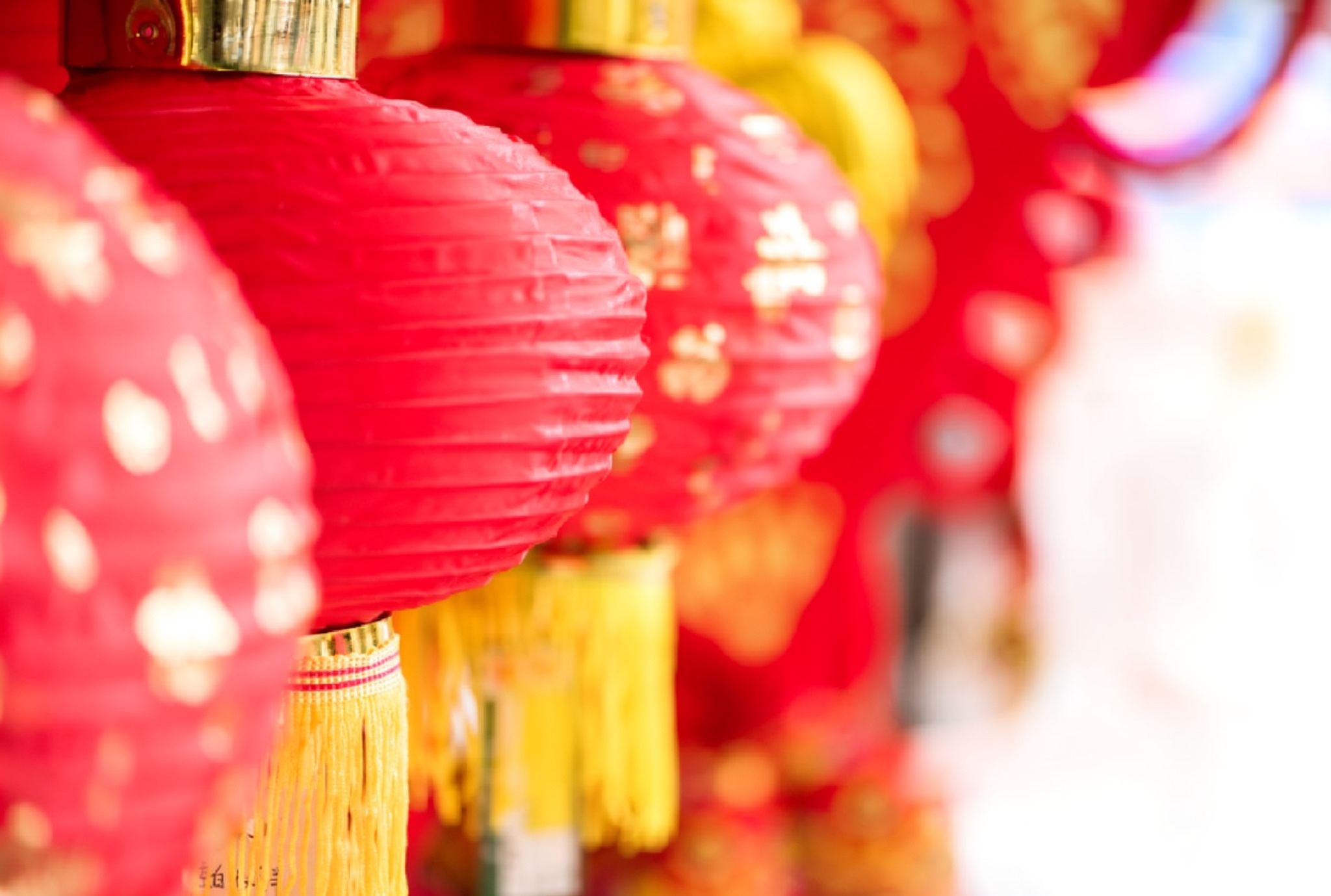
No festival in China commands the devotion, preparation, and sheer scale of the Spring Festival, known in Chinese as Chūnjié or simply Guònián (过年, "crossing the year"). Falling between late January and mid-February on the solar calendar, it marks the beginning of the lunar new year and triggers the largest annual human migration on Earth, as hundreds of millions of workers journey home for the New Year's Eve reunion dinner (年夜饭). The celebrations span fifteen days, from the thorough house-cleaning that sweeps away ill fortune to the final Lantern Festival, and every day carries its own customs: pasting red couplets on doorframes, setting off firecrackers to frighten the mythical beast Nian, exchanging red envelopes (红包) filled with money, and feasting on symbolic foods like dumplings shaped like ancient gold ingots. The color red dominates everything — lanterns, clothing, decorations — because red is the color of fire, vitality, and protection against evil. Read the full Spring Festival article →
New Year's Eve (除夕) — Last Day of the 12th Lunar Month
The night before the new year begins is Chuxi (除夕), literally "banishing the old evening" — and it is, for many, the emotional heart of the entire festival season. This is the night of the reunion dinner (年夜饭), the most important meal of the Chinese year, when every dish carries symbolic meaning: whole fish for surplus, dumplings for wealth, sticky rice cake for advancement. After the feast, families observe shousui (守岁), the vigil of "guarding the year," staying awake together through midnight to extend their parents' longevity. At the stroke of twelve, the sky explodes with fireworks and firecrackers, a thunderous farewell to the old year and a roaring welcome to the new. Red couplets frame every doorway, the inverted character 福 (fortune) adorns every door, and the ancient Door Gods stand watch through the night. Read the full Chuxi article →
Lantern Festival (元宵节) — 15th Day of the 1st Lunar Month
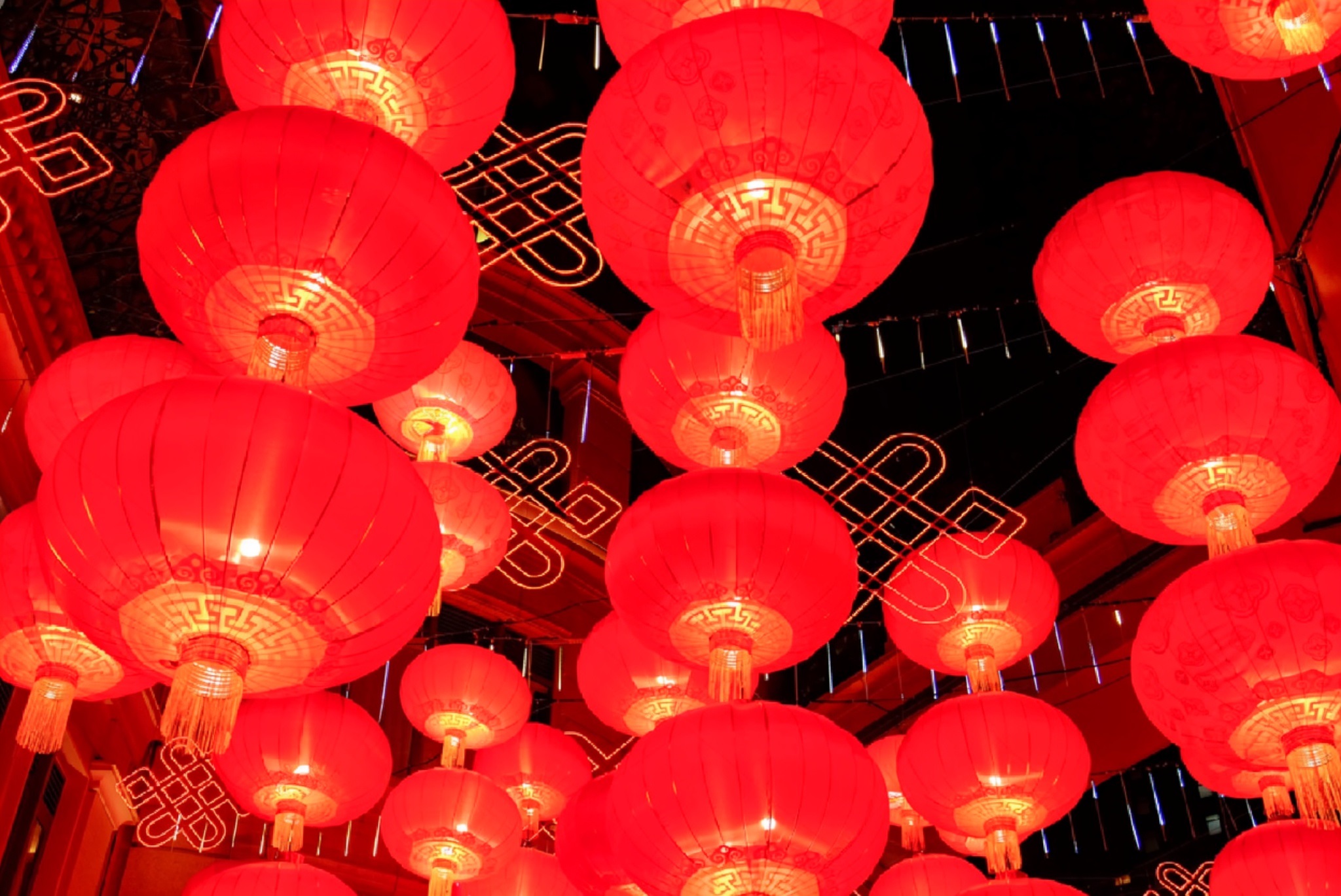
Two weeks after the new year begins, the first full moon of the lunar year rises, and China erupts in light. The Lantern Festival, or Yuánxiāo Jié, transforms cities and villages into rivers of glowing paper lanterns — from simple red spheres to elaborate dragon-shaped constructions spanning entire streets. Families gather to eat tangyuan (汤圆), glutinous rice balls whose round shape symbolizes completeness and togetherness, while children carry rabbit-shaped lanterns through the streets. In ancient times, this was the one night when young women of good families could venture outside unchaperoned, making it a de facto festival of romance — a night of stolen glances beneath the lantern glow.
Qingming Festival (清明节) — Around April 5 (Solar Calendar)
When spring rains soften the earth and willow branches turn green, the Chinese observe Qingming, the "Clear and Bright" festival, a day dedicated to honoring the dead. Families travel to ancestral graves to sweep the tombs, offer food and incense, burn paper money for the afterlife, and bow in reverence. Yet Qingming is not purely mournful — it is equally a celebration of spring's return. After paying respects, families go on spring outings (踏青), fly kites with small lanterns attached, and play on swings. The festival beautifully embodies the Chinese philosophical acceptance of life and death as intertwined, a single breath of the cosmos rather than opposing forces.
Dragon Boat Festival (端午节) — 5th Day of the 5th Lunar Month
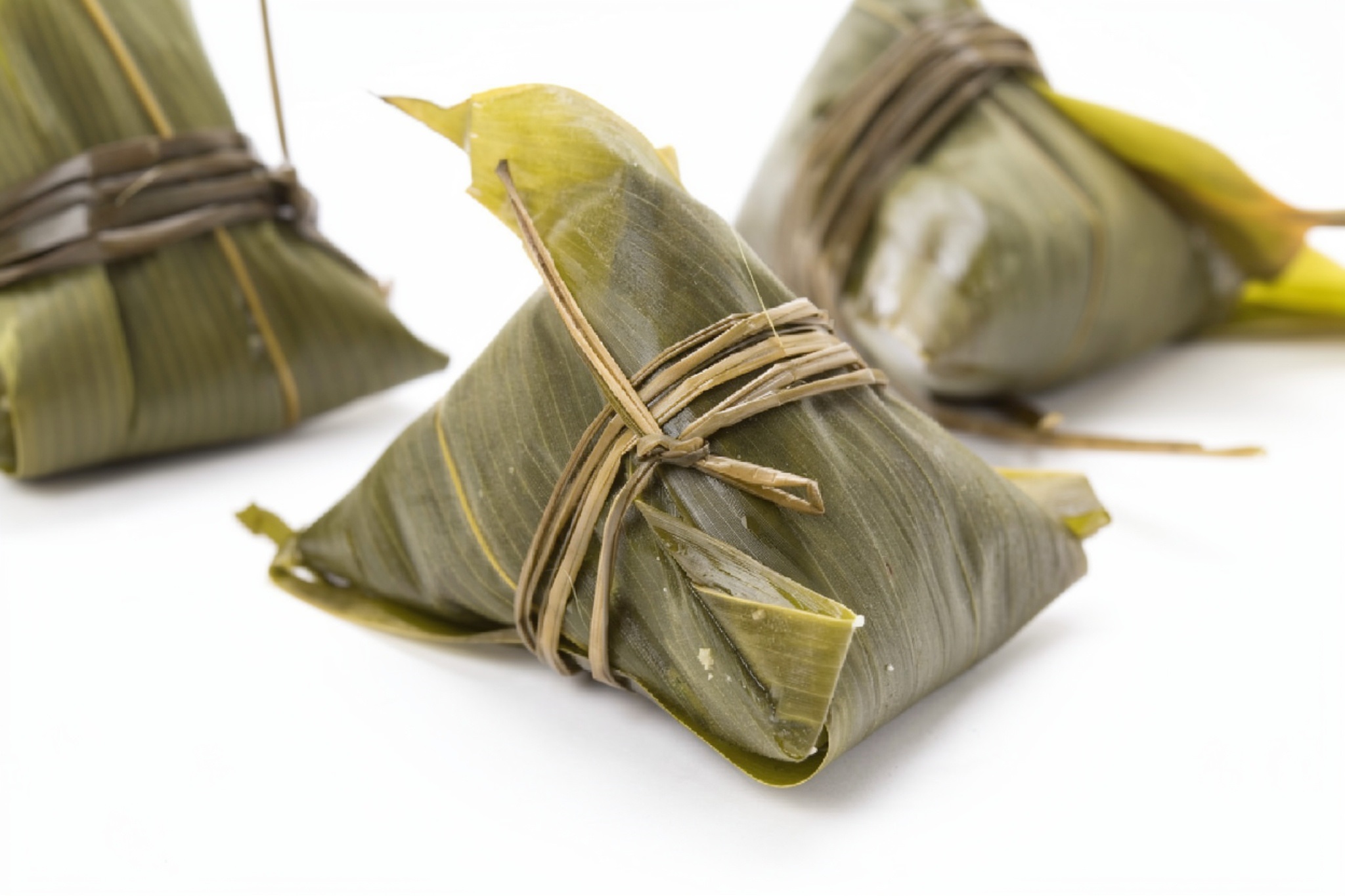
The fifth day of the fifth lunar month carries the strongest yang energy of the year — and, in traditional belief, the greatest danger of disease and evil spirits. The Dragon Boat Festival, or Duānwǔ Jié, arose partly as a day of protective rituals: hanging mugwort and calamus above doors, drinking realgar wine, and tying five-colored silk threads around children's wrists. But it is forever associated with the poet Qu Yuan, who drowned himself in the Miluo River in 278 BCE in protest against political corruption. Legend holds that villagers raced out in boats to save him and threw rice dumplings into the water to distract the fish from his body — giving birth to the twin traditions of dragon boat racing and eating zongzi (粽子), bamboo-leaf-wrapped parcels of glutinous rice.
Qixi Festival (七夕) — 7th Day of the 7th Lunar Month
On a summer night when the stars Vega and Altair appear closest across the Milky Way, China celebrates Qixi, the "Night of Sevens," often called Chinese Valentine's Day. The festival commemorates the legend of Zhinü, the celestial weaver girl, and Niulang, the mortal cowherd, whose love was forbidden by the Queen Mother of the West. She slashed the sky with her hairpin to create the Silver River (the Milky Way) between them, but relented enough to allow the lovers to meet once a year on this night, crossing a bridge formed by magpies. Traditionally, young women would display their needlework and pray to Zhinü for skill in weaving and a good husband, while couples exchanged tokens of affection under the stars.
Mid-Autumn Festival (中秋节) — 15th Day of the 8th Lunar Month
When the autumn moon hangs fullest and brightest, families gather to admire its glow, share mooncakes (月饼), and tell the tale of Chang'e, the woman who drank the elixir of immortality and floated to the moon, where she lives still with her jade rabbit companion. The Mid-Autumn Festival is perhaps the most poetically resonant of all Chinese celebrations — the round moon mirroring the round mooncake mirroring the circle of family reunited. For those separated by distance, gazing at the same moon becomes an act of communion, a theme immortalized in Su Shi's immortal line: "May we all be blessed with longevity, though thousands of miles apart, we share the beauty of the same moon."
Double Ninth Festival (重阳节) — 9th Day of the 9th Lunar Month
The number nine is the highest single digit and the most yang of numbers; when two nines meet, the yang energy reaches its zenith. The Double Ninth Festival, or Chóngyáng Jié, is traditionally a day for climbing mountains — ascending to high places to absorb the powerful yang qi and ward off misfortune. People drink chrysanthemum wine, eat chongyang cake (a layered rice cake whose name puns on "high"), and wear sprigs of dogwood. In modern China, the day has been reimagined as Seniors' Day, a time to honor the elderly with visits, gifts, and expressions of gratitude, adding a Confucian layer of filial respect to the ancient custom.
Winter Solstice (冬至) — Around December 22 (Solar Calendar)
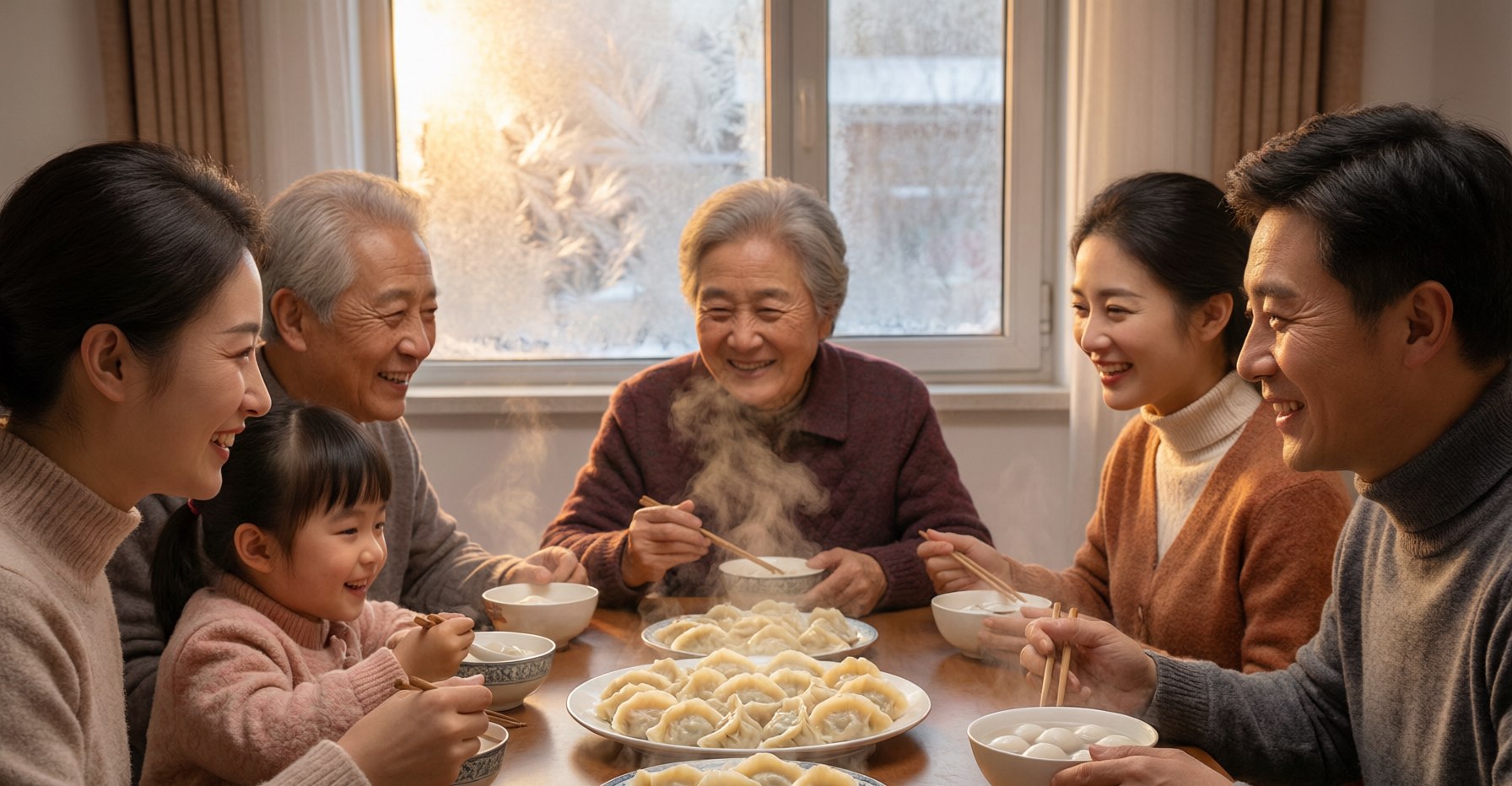
The Winter Solstice, or Dōngzhì, marks the shortest day and longest night of the year — the moment when yin reaches its peak and yang begins its slow return. In Chinese cosmology, this is a turning point of profound significance, a cosmic rebirth celebrated with family gatherings and special foods. In northern China, families make and eat dumplings (饺子), their shape reminiscent of ears, in memory of the physician Zhang Zhongjing who wrapped mutton and warming herbs in dough to treat frostbitten ears. In the south, tangyuan and red bean paste treats warm the table. The day carries the quiet joy of knowing that light is returning, that the longest darkness has passed.
Laba Festival (腊八) — 8th Day of the 12th Lunar Month
In the depths of winter, as the lunar year draws toward its close, the Laba Festival arrives with the warming aroma of Laba porridge (腊八粥) — a nourishing congee of rice, millet, red beans, peanuts, dates, lotus seeds, and dried fruits, simmered for hours until thick and fragrant. The festival has Buddhist origins, commemorating the day Siddhartha Gautama attained enlightenment after accepting a bowl of rice porridge, but it has long since merged with folk traditions of preparing for the new year. Families also pickle Laba garlic in vinegar, the cloves turning a vivid emerald green, and begin the serious work of New Year preparations: shopping, cleaning, and planning the reunion feast. Laba is the quiet overture to the Spring Festival symphony, the first note of anticipation.
Festivals as Living Heritage
What makes Chinese festivals remarkable is not merely their antiquity — though many stretch back two thousand years or more — but their vitality. These are not museum pieces or historical curiosities. On any given festival day, over a billion people participate in rituals their ancestors performed in nearly identical fashion: the same red paper cut into the same patterns, the same rice wrapped in the same leaves, the same moon admired with the same mixture of longing and gratitude. Yet the festivals also evolve. QR codes have replaced paper red envelopes for many young urbanites. Online memorial halls allow the diaspora to honor ancestors across oceans. Dragon boat races now take place on the Thames, the Charles River, and Sydney Harbour.
This living quality is the essence of Chinese festival culture. Each celebration is simultaneously a personal memory (grandmother's hands folding dumplings), a family ritual (the specific dish that appears only on this day, prepared only this way), and a civilizational thread connecting the present to an immemorial past. To participate in the Chinese festival year is to inhabit time differently — not as a linear march toward progress, but as a spiral, returning each year to the same sacred points, finding them familiar yet renewed, like meeting an old friend who has aged gracefully and still has stories to tell.
The ChinaMaxxing philosophy holds that understanding these rhythms is essential to understanding China itself. The festivals are not peripheral to Chinese civilization; they are its heartbeat, its calendar of meaning, its annual rehearsal of what it means to be part of a family, a community, and a culture that stretches back to the first farmers who looked up at the moon and decided that its fullness deserved celebration.