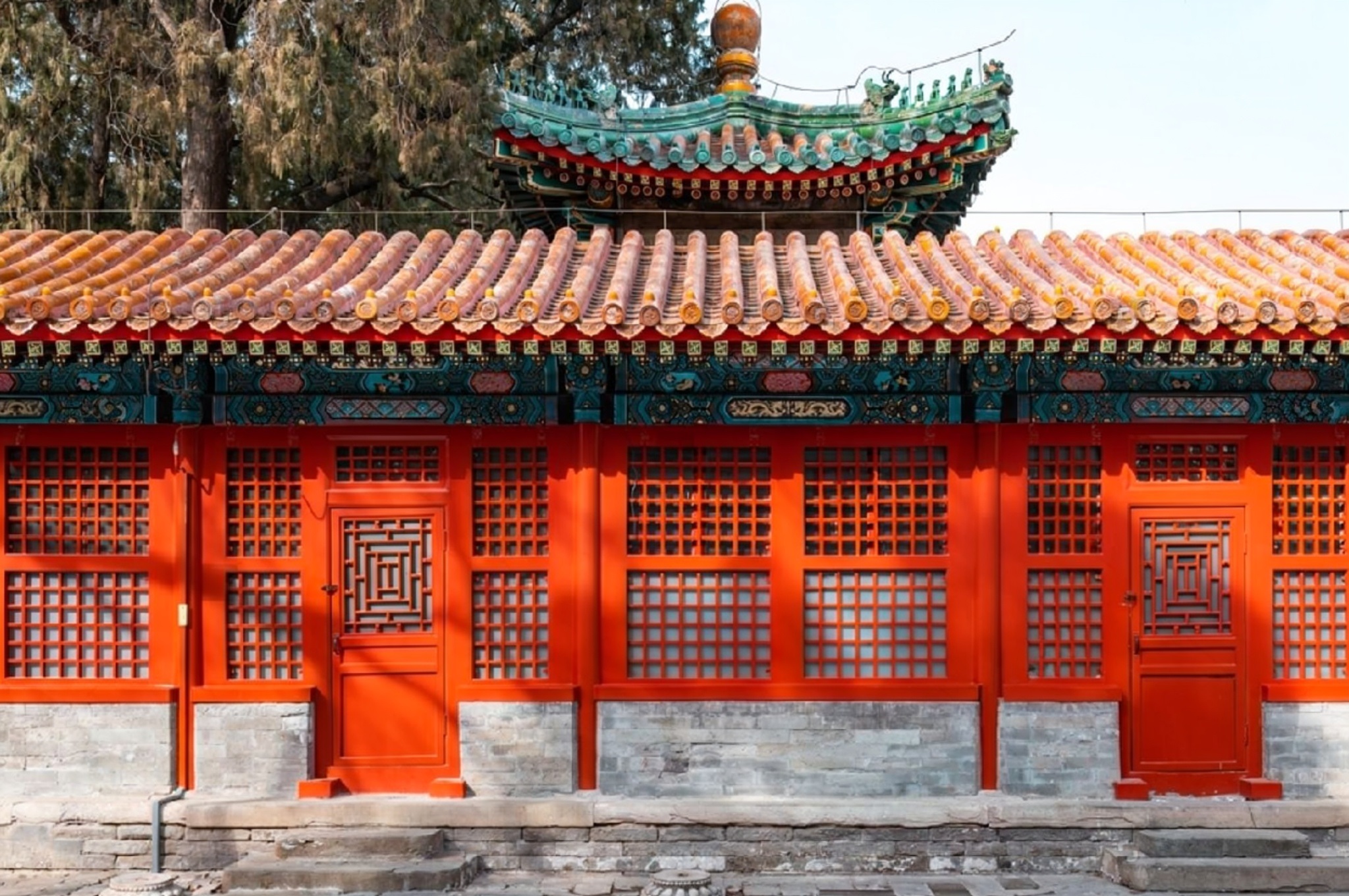
In the mountainous southeast of Anhui Province, where the Huangshan range sends its foothills tumbling toward the Xin'an River, there exists a cluster of villages so perfectly composed, so deliberately arranged according to principles of cosmic harmony, that they seem less built than grown — as though the landscape itself had produced them according to some internal logic of beauty and balance. These are the villages of Huizhou, and they represent the single most sophisticated integration of architecture, landscape, and philosophical principle in the Chinese rural tradition.
Huizhou — the historical prefecture encompassing present-day Huangshan City and surrounding counties — was, from the Song Dynasty through the Qing, one of China's most culturally productive regions. It produced more jinshi degree-holders per capita than almost any other prefecture. It generated a merchant class so wealthy and so culturally ambitious that their architectural legacy — the whitewashed, black-tiled, horse-head-walled houses that define the regional style — remains one of China's most immediately recognizable aesthetic signatures. And it did all this in a landscape of such constrained agricultural potential that its people were forced, by sheer geographic necessity, to look outward for their fortune.
The Merchant's Dilemma: Wealth Far from Home
The Huizhou merchant (Hui shang) is one of the great figures of Chinese economic history. From the Ming Dynasty onward, men from this mountainous region fanned out across China, establishing trading networks in salt, tea, timber, ink, and textiles. They became fabulously wealthy — the salt merchants of Yangzhou, almost all Huizhou natives, controlled one of the empire's most lucrative monopolies. Yet their wealth created a profound tension. In the Confucian social hierarchy, merchants occupied the lowest of the four classes, below scholars, farmers, and artisans. They were rich but not respected. Powerful but not legitimate.
The Huizhou response to this tension was architectural and cultural. A merchant who could not buy social status could build it. He returned to his home village and constructed a house of such refinement, such obvious cultivation, that it demonstrated not merely wealth but taste — the quality that, in the Chinese value system, distinguished the gentleman from the mere rich man. The houses of Huizhou are, in this sense, arguments: arguments that commercial success and cultural refinement are not incompatible, that a man can trade in salt and still compose poetry, that money spent on beauty is money well spent.
"In the morning, one is a merchant; by evening, one is a scholar. The Huizhou man carries his books in one hand and his abacus in the other."
— Traditional Huizhou saying, reflecting the region's ideal of merchant-scholar duality
This dual identity — merchant and scholar, commerce and culture — is written into every Huizhou house. The exterior is austere, almost severe: high whitewashed walls, minimal fenestration, the dramatic stepped profiles of horse-head walls (matou qiang) rising above the roofline. But the interior is a revelation of carved wood, painted beams, and courtyard gardens of extraordinary delicacy. The message is clear: do not judge by the street. Enter, and discover what wealth has made possible.
Hongcun: The Village as Ox
Hongcun, inscribed as a UNESCO World Heritage Site in 2000 alongside neighboring Xidi, is the supreme expression of Huizhou village planning. Founded in 1131 by the Wang clan, who relocated from a nearby settlement after a series of misfortunes, Hongcun was designed — and the word "designed" is essential — according to feng shui principles of extraordinary specificity. The village's layout is not organic, not accidental, not the product of gradual accretion. It is a deliberate composition, conceived as a unified whole and executed over generations.
The conceit is this: Hongcun is shaped like an ox. Leishan Hill, behind the village, is the ox's head. Two ancient trees on the hilltop are its horns. The cluster of houses below forms the body. Four bridges over the village's water channels are its legs. The winding water channel that runs through every lane and passes before every house is the ox's intestine. And the two ponds — the central Moon Pond (Yuezha) and the larger South Lake (Nanhu) — are the ox's stomachs.
This is not whimsy. In feng shui theory, water is the conductor of qi — vital energy. A village without flowing water is a body without blood. The Hongcun water system, engineered in the fifteenth century by a geomancer named He Keda, channels mountain stream water through every part of the settlement, providing drinking water, fire protection, washing facilities, and — most importantly from a feng shui perspective — a continuous circulation of vital energy through the village's body. The system has functioned without interruption for over five hundred years.
The Moon Pond, a roughly semicircular pool at the village center, is surrounded by the ancestral hall and the houses of the most prominent families. Its still water reflects the horse-head walls and the sky, creating a composition of such perfect balance that it has become one of the most photographed scenes in rural China. At dawn, when mist rises from the water and the first light catches the upper walls, the pond becomes a painting by a Ming Dynasty master — all suggestion, all atmosphere, all the quiet drama of a world in perfect equilibrium.
The Three Carvings: Wood, Stone, and Brick
If the village layout represents Huizhou's philosophical ambition, the architectural decoration represents its artistic achievement. Huizhou houses are celebrated for their "three carvings" (san diao): wood carving, stone carving, and brick carving, each executed with a level of technical mastery that transforms structural elements into narrative art.
The wood carvings are the most spectacular. Interior beams, window frames, door panels, and balcony railings are covered in relief carvings of extraordinary complexity — scenes from classical literature, mythological narratives, floral patterns, geometric lattices, and figures so finely rendered that individual facial expressions are visible at a distance of centimeters. The Chengzhi Hall in Hongcun, built in 1855 by a salt merchant, contains wood carvings that required, according to local tradition, four years to complete. Over one hundred figures populate its beam carvings, depicting scenes from Romance of the Three Kingdoms and Journey to the West. The wood was originally coated in gold leaf, traces of which remain visible in protected areas.
Stone carvings appear on door frames, column bases, and the decorative panels flanking entrances. The preferred material is a local green-grey limestone, which weathers to a soft patina. Common motifs include lions (guardians), lotus flowers (purity), and bats (homophonous with "fortune," fu). The stone carvings are more restrained than the wood — deeper in relief, simpler in composition — but no less skilled in execution.
Brick carvings adorn the exterior walls, particularly the elaborate gate surrounds that announce a house's status to the street. These are fired-clay reliefs, often depicting landscapes, figures, or calligraphic panels, set into the whitewashed wall above the entrance. They are the house's public face — the element visible to passersby — and their quality signals the family's wealth and cultivation to the community.
The Sky Well: Capturing Heaven in a Box
The defining spatial feature of a Huizhou house is the tianjing — the sky well. This is a small, rectangular courtyard open to the sky, typically measuring only a few meters in each direction, around which the house's rooms are arranged. From the interior, looking up, one sees a rectangle of sky framed by the roofline — a piece of heaven captured and contained within the domestic space.
The sky well serves multiple functions. Practically, it provides light and ventilation to the house's interior rooms, which would otherwise be dark in the deep-plan layout necessitated by the high exterior walls. Climatically, it creates a thermal chimney effect, drawing cool air through the house in summer. But its primary significance is symbolic. In feng shui and broader Chinese cosmological thought, the sky well represents the connection between the human dwelling and the cosmos above. Rain falls into the sky well and drains through channels in the floor — water entering the house from heaven, bringing qi and prosperity. The family gathers around the sky well. Ancestors are honored beneath it. It is the spiritual center of the domestic space, as essential as the hearth in a European house.
"A house without a sky well is a body without breath. The sky enters, the rain enters, the seasons enter. Without them, the walls are merely a tomb."
— Huizhou architectural proverb, transmitted orally among building masters
Ancestral Halls: The Architecture of Memory
Every Huizhou village of consequence possesses an ancestral hall (citang) — a communal building dedicated to the veneration of the clan's forebears. These halls are typically the largest and most elaborately decorated structures in the village, their scale and ornamentation reflecting the clan's collective wealth and social standing. The Wang clan's ancestral hall in Hongcun, the Chengzhi Hall, and the Jing'ai Hall in Xidi are among the finest surviving examples.
The ancestral hall is not merely a building. It is an institution — the physical embodiment of the clan's continuity across generations. Within its main hall, spirit tablets bearing the names of deceased ancestors are arranged in hierarchical order. Offerings of food, incense, and paper money are made on festival days. Clan meetings are held beneath its beams. Disputes are adjudicated in its courtyard. The hall is simultaneously a temple, a parliament, a court, and a museum. It is the place where the living negotiate their relationship with the dead, and where the dead maintain their authority over the living.
The architectural vocabulary of the ancestral hall draws on the full repertoire of Huizhou decorative arts. The main hall's beams are carved with dragons, phoenixes, and scenes of filial piety. The columns are often massive whole-tree trunks, imported at great expense from distant forests. The entrance gate is a monumental composition of stone and brick carving, designed to overwhelm the visitor with the clan's antiquity and importance. To enter an ancestral hall is to be reminded, architecturally, that you are small and temporary, and that the clan endures.
Xidi and the Question of Preservation
Xidi, Hongcun's UNESCO partner, offers a slightly different character. Where Hongcun is defined by its water system and its dramatic pond-side compositions, Xidi is defined by its streets — a linear arrangement of houses along a central axis, with lanes branching off at regular intervals. Its houses are older on average, its atmosphere more austere, its carvings perhaps more refined. The Huiyuan Hall, the Difu Hall, and the Taoli Hall represent successive periods of Huizhou domestic architecture, from the Ming Dynasty's relative simplicity to the Qing Dynasty's baroque elaboration.
Both villages face the challenges of preservation in a modernizing China. Tourism brings revenue but also wear. Young people leave for cities, and the houses stand empty, their wood carvings slowly darkening, their sky wells collecting leaves. The Chinese government has invested significantly in structural conservation — replacing rotted timbers, repairing roofs, stabilizing foundations — but the deeper challenge is cultural: how to maintain a living tradition when the economic and social structures that produced it have vanished.
The Huizhou merchants are gone. The salt monopoly is a historical footnote. The imperial examination system that produced the scholar-officials who built these houses was abolished in 1905. Yet the houses remain, and in their remaining, they continue to argue their case: that beauty is not frivolous, that wealth without culture is merely accumulation, that a house should be more than shelter — it should be a philosophical statement, a prayer in wood and stone, a small piece of cosmic order made manifest in the human world. The sky well still admits the rain. The carvings still tell their stories. The ox-shaped village still breathes. And the mountains of Huizhou still watch over it all, patient as they have always been, waiting for the next generation to look up and understand what was built here, and why.