On the fifteenth night of the first lunar month, when the new year's first full moon swells to its roundest and most luminous, something extraordinary happens across China. From the frozen courtyards of Harbin to the subtropical lanes of Guangzhou, from the ancient water towns of Jiangnan to the neon canyons of Shanghai, the darkness is conquered. Lanterns appear — millions upon millions of them — in windows and doorways, strung along bridges and temple eaves, floating on rivers, rising into the sky. The Spring Festival's fifteen-day crescendo reaches its finale in a single night of pure radiance, and for a few hours, the boundary between earth and heaven seems to dissolve in warm amber light.
The Lantern Festival, known in Chinese as Yuánxiāo Jié (元宵节) or Shàngyuán Jié (上元节), is far more than a pretty spectacle. It is a celebration with over two thousand years of continuous history, a night dense with legend, romance, spiritual meaning, and communal joy. It is the night when riddles hang from silk threads, when sweet rice balls steam in every kitchen, when lion dancers thunder through the streets, and when — in ancient times — the strict social order relaxed just enough to allow young women to walk freely beneath the lanterns, stealing glances at young men who might become their husbands. To understand the Lantern Festival is to understand something essential about the Chinese spirit: its love of beauty, its reverence for light overcoming darkness, and its insistence that even the most sacred occasions must include play.
Origins in the Han Dynasty: Two Thousand Years of Light
The Lantern Festival's origins reach back to the Western Han Dynasty (206 BCE – 9 CE), when Emperor Ming, a devout patron of Buddhism, learned that monks lit lanterns in their temples on the fifteenth day of the first month to honor the Buddha's relics. Charmed by the practice, the emperor commanded that all temples, palaces, and households display lanterns on this night. What began as a religious observance gradually absorbed older folk traditions — fire worship, celebrations of the first full moon, prayers for a good harvest — and evolved into the grand popular festival we know today.
By the Tang Dynasty (618–907 CE), the Lantern Festival had become a spectacle of staggering proportions. Emperor Xuanzong once commissioned a lantern display of fifty thousand lanterns in the capital Chang'an, and the curfew that normally locked city residents indoors after dark was lifted for three nights, allowing the entire population to roam the illuminated streets. The Song Dynasty (960–1279) extended the celebration to five days and elevated lantern-making to a fine art, with artisans competing to create the most intricate designs — revolving lanterns whose heat-driven mechanisms cast moving shadows, palace lanterns of carved wood and painted silk, dragon lanterns that stretched a hundred feet along the streets.
Legends: The Jade Emperor's Swan and the Clever Maid
One beloved legend tells of a celestial swan belonging to the Jade Emperor, ruler of heaven, that descended to the mortal world and was killed by a hunter. Enraged, the Jade Emperor ordered his heavenly army to descend on the fifteenth day of the first month and burn the human world to ashes. A kind-hearted fairy, pitying mankind, risked her own safety to warn the people below. A clever village elder devised a plan: on the appointed night, every household would hang red lanterns, set off firecrackers, and light bonfires, so that when the Jade Emperor looked down, he would believe the world was already ablaze. The plan worked. Heaven's army stood down, and humanity was saved — and ever since, people light lanterns and firecrackers on this night in gratitude.
A second legend, set during the Han Dynasty, tells of Dongfang Shuo, a witty court advisor, who discovered a palace maid named Yuanxiao weeping because she missed her family. Forbidden from leaving the palace, she was desperate. Dongfang Shuo devised an elaborate scheme: he spread a prophecy that the God of Fire would burn the capital on the fifteenth night, and the only salvation was for the entire city to prepare tangyuan (sweet rice balls) and light lanterns as offerings. The emperor, alarmed, ordered the palace opened so that all could participate. Yuanxiao was sent out to prepare the tangyuan in the city, and her family was secretly brought to meet her. The city was saved (the fire never came), and the festival of tangyuan and lanterns was born. The sweet rice balls are still called yuanxiao (元宵) in northern China in her honor.
Customs and Celebrations: A Night of Wonder
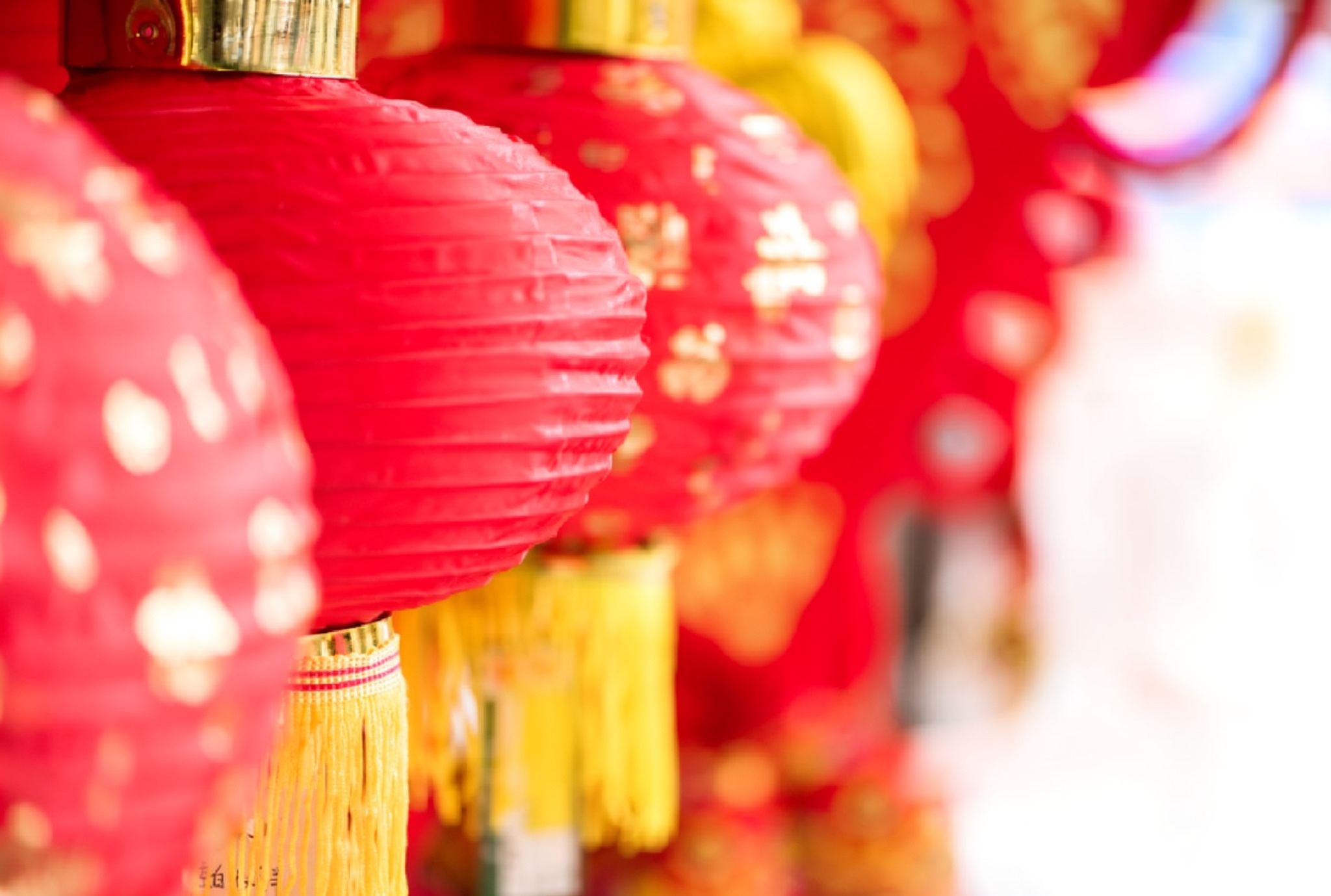
The Lantern Festival's customs form a constellation of activities that engage every sense. The lantern displays themselves are the centerpiece — in traditional form, these range from simple spherical lanterns of red silk to elaborate narrative lanterns depicting scenes from mythology, history, and literature. In modern times, cities compete with spectacular public displays: Zigong in Sichuan province is renowned worldwide for its lantern festival, where artisans construct towering lanterns of porcelain, glass, and LED light that transform entire parks into luminous wonderlands, attracting millions of visitors each year.
Equally beloved is the tradition of lantern riddle guessing (猜灯谜, cāi dēngmí). Riddles are written on slips of paper and pasted onto lanterns, and passersby attempt to solve them. The riddles draw on every domain of Chinese culture — character decomposition, literary allusions, historical figures, wordplay on homophones. A correct answer earns a small prize, and the tradition transforms the streets into an open-air puzzle competition that delights children and challenges scholars alike. The practice dates to the Song Dynasty and remains one of the festival's most intellectually engaging customs.
Lion dances and dragon dances thunder through the streets, their performers acrobatic and fearless, leaping onto benches and through hoops while drums and cymbals crash. Firecrackers and fireworks paint the sky. In some regions, people practice "walking away illness" (走百病, zǒu bǎi bìng) — women walk across bridges on this night, believing that the act carries sickness away from the body and into the flowing water below. In northern cities, the night air rings with the sound of suona horns and the shuffle of stilt-walkers towering above the crowd.
Tangyuan and Yuanxiao: The Sweet Taste of Reunion
No Lantern Festival table is complete without tangyuan (汤圆) or yuanxiao (元宵) — glutinous rice balls, often filled with black sesame, peanut, or red bean paste, whose round shape symbolizes the full moon, family completeness, and the wholeness of the new year. The name itself is auspicious: tangyuan sounds like 团圆 (tuányuán), meaning "reunion," making the dish a edible prayer for family togetherness.
Though often used interchangeably, tangyuan and yuanxiao are actually different preparations reflecting the north-south divide in Chinese cuisine. In the south, tangyuan are made by wrapping a ball of wet glutinous rice dough around the filling, producing a smooth, soft texture — like a delicate mochi. In the north, yuanxiao are made by rolling cubes of solidified filling in a basket of dry glutinous rice flour, layer by layer, until a rough, slightly chewy sphere forms. The cooking method differs too: tangyuan are gently boiled, while yuanxiao are boiled vigorously, their rougher surface creating a slightly thicker, cloudier broth. Both are exquisite; the debate over which is superior is a friendly, eternal argument between northern and southern families.
The First Full Moon and the Festival of Romance
The Lantern Festival falls on the first full moon night of the lunar year, and this astronomical fact carries deep symbolic weight. In Chinese cosmology, the full moon represents perfection, completeness, and the harmonious union of yin and yang. To celebrate beneath it is to align oneself with cosmic order, to affirm that the new year begins under a sign of wholeness. The moon's light, reflected in countless lanterns below, creates a sympathetic magic: as above, so below; heaven's light multiplied by human hands until the entire world glows.
This luminous night also carried a social significance that made it, in effect, ancient China's Valentine's Day. In a society where young women of respectable families were largely confined to the inner quarters, the Lantern Festival was the rare exception — the one night when they could venture into the streets, accompanied by maids but free to mingle with the crowd. Young men and women exchanged glances beneath the lanterns, and countless love stories in Chinese literature begin on this very night. The great Song Dynasty poet Xin Qiji captured this electric atmosphere in his immortal ci poem "青玉案·元夕" (To the Tune of Green Jade Table, Lantern Festival Night):
"众里寻他千百度,蓦然回首,那人却在,灯火阑珊处。"
"I searched for her a thousand times in the crowd; suddenly I turned my head, and there she was — in the dim glow where the lanterns fade."
— Xin Qiji (辛弃疾), Song Dynasty
These lines, written eight centuries ago, still quicken the heart. The image of a beloved glimpsed at the edge of the light, in the space between brilliance and shadow, has become one of Chinese literature's most enduring metaphors for love's sudden, unexpected arrival.
Regional Splendors: From Zigong to Pingxi
The Lantern Festival takes different forms across the Chinese-speaking world, each region adding its own genius to the celebration. In Zigong, Sichuan, the International Dinosaur Lantern Festival transforms the city into a phantasmagoria of light, with lanterns shaped like dragons, phoenixes, and mythical creatures rising forty feet high, their surfaces crafted from thousands of individual porcelain plates wired together and illuminated from within. The tradition of Zigong lantern-making dates to the Tang Dynasty and represents a living folk art of extraordinary sophistication.
In Pingxi, Taiwan, the festival takes to the sky. Thousands of sky lanterns (天燈, tiāndēng) — large paper lanterns heated by a small flame at their base — are released simultaneously into the night, each carrying written wishes and prayers upward into the darkness. The sight of ten thousand glowing lanterns rising like earthbound stars reversing their fall is among the most breathtaking spectacles in the festival calendar. The tradition reportedly originated as a signal to villagers that bandits had passed and it was safe to return home; today it is a collective act of hope, each lantern a small prayer ascending.
In the water towns of Jiangnan — Wuzhen, Xitang, Zhouzhuang — lanterns float on canals, their reflections doubling the light and turning the waterways into rivers of gold. In Quanzhou, Fujian, the tradition of "lantern drum" performances combines music, dance, and acrobatics in processions that wind through ancient streets. Each variation testifies to the festival's remarkable adaptability: the core meaning — light, reunion, celebration — remains constant while the expression shifts with local materials, landscape, and imagination.
A Living Light: The Festival Today
In contemporary China, the Lantern Festival retains its power to gather and delight. Families still prepare tangyuan together, still walk the streets to admire displays, still compete to solve the trickiest riddles. Yet the festival also evolves. LED technology has expanded the possibilities of lantern design into the realm of immersive installation art. Social media transforms local displays into viral spectacles, drawing visitors from across the country. The Pingxi sky lantern release is now livestreamed to millions worldwide, and dragon dance troupes perform the Lantern Festival in Chinatowns from San Francisco to London to Johannesburg.
What endures, beneath the technology and the tourism, is the festival's essential gift: a night when the ordinary world is transfigured by light. When a child looks up and sees the sky filled with floating lanterns, when an elderly couple walks hand in hand beneath strings of red silk, when a young woman pauses before a riddle and laughs at its cleverness — in these moments, the two-thousand-year thread holds. The Han Dynasty monks lighting their first oil lamps, the Tang Dynasty crowds flooding Chang'an's streets, the Song Dynasty poets composing verses by lantern-light — all are present in tonight's glow. The Lantern Festival does not merely commemorate the past; it renews it, adds another year of memory to the pile, and passes the flame — literally, beautifully — to the next generation.