There is a song every Chinese child learns in primary school, a melody so ubiquitous it borders on national liturgy: "The fifty-six ethnic groups are fifty-six flowers, fifty-six brothers and sisters in one family." (五十六个民族,五十六朵花,五十六个兄弟姐妹是一家。) The image is deliberate — a garden, not a monolith. Each flower distinct in color, fragrance, and form, yet rooted in shared soil, nourished by the same rain, turning together toward the same sun.
China's ethnic composition is, in raw numbers, among the most lopsided of any multi-ethnic nation on Earth. One group — the Han — constitutes over 91 percent of 1.4 billion people. And yet the remaining eight percent represents more than 110 million human beings, a population larger than that of Germany or Japan, spread across a geographic canvas that stretches from tropical rainforests to Arctic tundra, from the salt flats of the Taklamakan to the volcanic highlands of Manchuria. To speak of "Chinese culture" in the singular is to flatten a landscape of staggering, almost incomprehensible variety.
This guide is your map into that landscape. Not a census table — though numbers matter — but an invitation to see China as its own people see it at its most generous: a civilization that contains multitudes.
How Are the 56 Defined?
The number 56 is not ancient. It is, in fact, a product of one of the most ambitious ethnographic projects of the twentieth century. When the People's Republic was founded in 1949, the new government inherited a chaotic patchwork of self-identified communities — over 400 names were submitted during initial registration drives. Some were clans, some were dialect groups, some were village confederations with no broader identity. The task of sorting this kaleidoscope into coherent categories fell to teams of ethnologists, linguists, and historians working from the 1950s through the early 1980s.
The criteria they employed drew on Soviet ethnographic theory, particularly Joseph Stalin's four markers of a nation: a common language, a common territory, a common economic life, and a common psychological makeup expressed through culture. To these, Chinese scholars added a crucial fifth element — self-identification. A group had to want to be recognized as distinct.
The process was neither clean nor uncontested. Some groups were merged: the various Tai-speaking peoples of Yunnan and Guangxi were consolidated under the Zhuang and Dai labels. Others were split: the Yi category came to encompass dozens of previously independent communities speaking mutually unintelligible languages. The final list of 55 minorities (plus the Han majority) was essentially fixed by 1979, with the Jino people receiving recognition in that year as the last addition.
The Chinese term minzu (民族) is itself revealing. It translates imperfectly as "ethnic group" or "nation" — it carries connotations of peoplehood that go beyond the Western anthropological sense of "tribe." A minzu is understood as a historical community with cultural continuity, not merely a kinship group. This distinction matters: it elevates each recognized group to the status of a people with a story, not a footnote.
The Han Majority: 91.5% of the Story
With approximately 1.28 billion members, the Han are the largest ethnic group on the planet. Yet "Han" is less an ethnicity in the narrow genetic sense than a civilizational identity — a vast umbrella under which Cantonese, Hokkien, Hakka, Shanghainese, Sichuanese, and dozens of other sub-groups maintain distinct dialects, cuisines, architectural traditions, and folk religions. A Hakka speaker from rural Fujian and a Mandarin-speaking Beijinger share a written script and a broad cultural grammar, but their daily lives, ancestral rituals, and musical traditions differ as much as those between many European nations.
The Han identity crystallized during the Han Dynasty (206 BCE–220 CE) and expanded over two millennia through migration, intermarriage, and cultural absorption. Many families now considered unimpeachably Han carry genetic and cultural traces of ancient Yue, Ba-Shu, and Xianbei ancestors. The Han are, in a sense, China's longest-running act of cultural synthesis — a river that has absorbed a thousand tributaries and still calls itself by one name.
The 55 Minorities: By the Numbers
Ranked by population, the minority groups form a steep pyramid. At the apex, five groups exceed ten million:
- Zhuang — 19 million, concentrated in Guangxi
- Hui — 11 million, dispersed nationwide
- Uyghur — 11 million, concentrated in Xinjiang
- Miao — 11 million, across Guizhou, Yunnan, Hunan
- Manchu — 10 million, historically in the Northeast
The next tier includes the Yi (9 million), Tujia (8 million), Tibetan (7 million), and Mongol (6 million). Below them, the Dong, Buyei, and Yao each number around 3 million; the Bai and Korean Chinese around 2 million; the Hani approximately 1.6 million.
At the base of the pyramid, the numbers become poignant. The Lhoba of southeastern Tibet number barely 4,000. The Tatar community, descendants of Volga merchants who trickled into Xinjiang over centuries, counts roughly 4,000 souls. The Hezhen — once the proud Nanai reindeer herders and salmon fishers of the Amur River — number around 5,000. Each of these tiny communities carries a complete cosmology, a unique relationship to landscape, an irreplaceable thread in the human tapestry.
Geographic Distribution
China's minorities are not randomly scattered. Their distribution follows the logic of terrain, climate, and history:
The Southwest — Yunnan Province alone is home to 25 of the 55 minorities, making it the most ethnically diverse province in China. The deep river valleys and isolated mountain ranges of Yunnan, Guizhou, and western Sichuan created natural refuges where small communities could maintain distinct identities across centuries. The Dai thrive in the tropical lowlands of Xishuangbanna; the Yi and Hani command the mid-altitude plateaus; the Tibetan and Qiang hold the high passes.
The Northwest — Xinjiang and Qinghai are the domain of Turkic and Mongolic pastoral peoples: Uyghur, Kazakh, Kirgiz, and Mongol. The Hui, uniquely, are everywhere — but Ningxia, their autonomous region, serves as a cultural heartland.
The North — Inner Mongolia stretches across the steppe, home to Mongol herders whose territory once formed the spine of the greatest land empire in history.
The Northeast — Manchuria's forests and river plains shelter the Manchu, Korean, Daur, Ewenki, and Oroqen peoples, each adapted to a different ecological niche from farmland to taiga.
The South — Guangxi, the Zhuang Autonomous Region, anchors the Tai-speaking peoples of China's southern borderlands.
Administratively, this diversity is recognized through a hierarchy of autonomous areas: 5 autonomous regions (equivalent to provinces), 30 autonomous prefectures, and over 120 autonomous counties. These designations grant nominal self-governance in cultural and linguistic affairs — a framework that, whatever its political complexities, embeds the principle of diversity into the state's own architecture.
Languages and Scripts
The linguistic diversity within China's borders is staggering. The 56 ethnic groups speak languages belonging to at least five major language families:
- Sino-Tibetan — Chinese, Tibetan, Burmese, and the Yi/Qiang branch
- Tai-Kadai — Zhuang, Dai, Dong, Buyei
- Austroasiatic — Wa, Blang, De'ang
- Austronesian — the languages of Taiwan's indigenous peoples (Gaoshan)
- Altaic (debated as a family, but useful as a geographic grouping) — Mongol, Manchu, Uyghur, Kazakh, Korean
Of these languages, approximately thirty have traditional writing systems. Tibetan script descends from seventh-century adaptations of Indian alphabets. The Uyghur script flows right-to-left from Arabic roots. The Yi syllabary, standardized in 1975, encodes over 800 syllables. The Mongolian vertical script, written top-to-bottom in columns running left-to-right, is one of the most visually distinctive writing systems on Earth.
Yet this diversity is under siege. Linguists estimate that over half of China's minority languages are endangered, spoken fluently only by elders. The Manchu language — once the administrative tongue of an empire — has fewer than twenty native speakers remaining. Each language lost is not merely a vocabulary erased but a way of parsing reality, a unique cognitive architecture, gone forever.
Living Cultures: What Makes Each Group Distinct
Reduce any culture to a single image and you do it violence. Yet certain signatures recur, giving each group a recognizable aesthetic and spiritual fingerprint:
Festivals — The Dai Water Splashing Festival in April, the Yi Torch Festival in June, the Mongol Naadam in July, the Tibetan Losar in winter, the Miao Lusheng Festival with its towering reed-pipe orchestras. The Chinese calendar is studded with minority celebrations that predate the Han-dominated lunar new year by centuries.
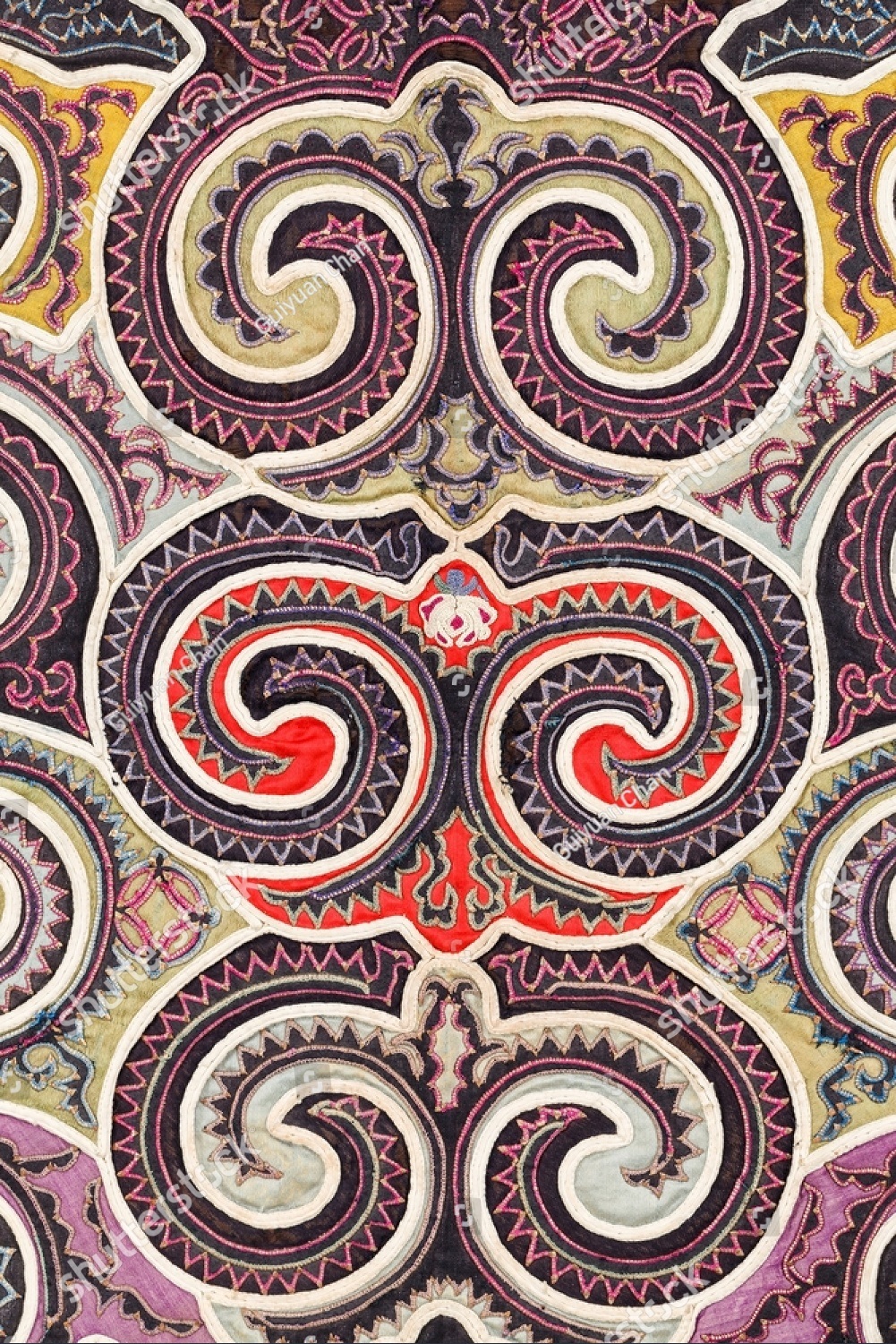
Dress — The Miao silver headdresses weighing up to ten kilograms. The Bai women's elaborate headdresses encoding wind, flowers, snow, and moon. The Yi's black-and-red lacquered capes. The Korean Chinese's pastel hanbok for holidays. Each textile tradition is a library of symbolism stitched in thread.
Architecture — The Dong wind-and-rain bridges built without a single nail. The Tibetan stone watchtowers of Danba. The Dai bamboo stilt houses raised above monsoon floods. The Fujian tulou — though Hakka, they demonstrate how architecture encodes communal values.
Music — The Dong Grand Song's wordless polyphony. The Mongol khoomii (throat singing). The Naxi ancient music preserving Tang Dynasty melodies. The Uyghur Twelve Muqam, a suite tradition spanning twenty-four hours of continuous performance.
Cuisine — The Hui's halal noodle shops in every Chinese city. The Dai's sour and spicy tropical salads. The Tibetan yak-butter tea and tsampa. The Korean Chinese's cold noodles and fermented kimchi. Food is the most democratic ambassador of any culture.
Religion — Tibetan Buddhism, Theravada Buddhism, Islam, shamanism, animism, ancestor worship, Dongba religion, Bimo priesthood — China's minorities practice faiths spanning the full spectrum of human spiritual invention.
Unity in Diversity: The Modern Framework
"五十六个民族,五十六朵花,五十六族兄弟姐妹是一家。"
"Fifty-six ethnic groups, fifty-six flowers — fifty-six peoples, brothers and sisters in one family."
The People's Republic's approach to ethnic diversity operates through several interlocking mechanisms. The autonomous region system grants designated areas formal authority over local cultural policy, education, and language use. Bilingual education — instruction in both Mandarin and the local minority language — is mandated in minority-concentrated areas, though implementation varies enormously from region to region.
Affirmative action policies (known as youhui zhengce, preferential policies) have historically provided minority students with bonus points on the national college entrance examination, exemptions from certain population policies, and targeted economic development funds. These policies have produced a generation of minority professionals, artists, and scholars who navigate fluently between their heritage culture and the broader Chinese mainstream.
Cultural preservation efforts range from the UNESCO-recognized intangible heritage listings (the Uyghur Muqam, the Mongol long song, the Dong Grand Song) to domestic programs documenting endangered languages, subsidizing traditional craft workshops, and maintaining ethnic museums in every provincial capital. The annual National Ethnic Minorities Traditional Sports Meet, held every four years, showcases everything from Mongol wrestling to Dai dragon-boat racing.
The challenges are real and should not be glossed. Urbanization draws young people from minority villages into Mandarin-dominant cities. Economic development sometimes bulldozes the very landscapes that sustained traditional lifeways. The tension between preservation and modernity, between distinctiveness and integration, plays out differently in every community — and often painfully.
Yet walk through the Sunday market in Dali, or attend a Torch Festival in Liangshan, or share a meal in a Hui neighborhood in Xi'an, and the vitality is undeniable. These are not museum cultures. They are living, arguing, cooking, singing, adapting, persisting. The garden metaphor endures not because it is politically convenient, but because it is, at ground level, true: the flowers are still blooming.
China's 56 ethnic groups are not a curiosity, a sidebar, a colorful appendix to the main narrative of Chinese civilization. They are Chinese civilization — its texture, its tension, its inexhaustible richness. To know one is to begin. To know all fifty-six is a lifetime's work. This guide is your first step.