There is a version of China that lives in the popular imagination — rice paddies, silk robes, Confucian temples, the soft consonants of Mandarin drifting through a Beijing hutong. It is not wrong, exactly. But it is incomplete. Turn your gaze northward, beyond the Great Wall's crumbling line, and the country transforms. The birch forests of Manchuria replace the bamboo groves. The call to prayer echoes from a mosque in Ningxia. A Korean grandmother pounds kimchi in a Yanbian kitchen while her grandson studies for the college entrance exam in bilingual textbooks. A Manchu elder in Harbin traces her family's banner lineage back three centuries. An Ewenki reindeer herder in the Greater Khingan Range feeds lichen to her animals in minus-forty cold.
Northern and northeastern China — the vast sweep from the Korean border to the Kazakh steppe, from the Amur River to the Taklamakan's edge — is home to ethnic communities whose histories, faiths, and lifeways could not be more different from the Han heartland's. They are the dynasty-builders, the desert traders, the forest hunters, the garrison descendants. Together, they dismantle any notion of China as a monolith. This is their story.
The Manchu: The Dynasty That Shaped Modern China
Ten million people in China identify as Manchu. By that number, they are the fifth-largest minority group. And yet the Manchu language has fewer than twenty native speakers. The paradox is the Manchu story in miniature: a people who conquered China, ruled it for 268 years, reshaped its borders, its cuisine, its dress, its very identity — and then, almost entirely, disappeared into it.
The Manchu are the descendants of the Jurchen peoples who founded the Jin Dynasty in the twelfth century. In 1616, Nurhaci united the Jurchen tribes under the Eight Banners system — a military-social organization that divided the population into color-coded banner companies, each responsible for its own soldiers, households, and economic production. His son Hong Taiji renamed the people "Manchu" and the dynasty "Qing." In 1644, the Qing swept through the Shanhai Pass and took Beijing. For the next two and a half centuries, the Manchu ruled the largest contiguous empire in Chinese history — an empire that, at its zenith, encompassed Manchuria, Mongolia, Xinjiang, Tibet, and the Chinese heartland.
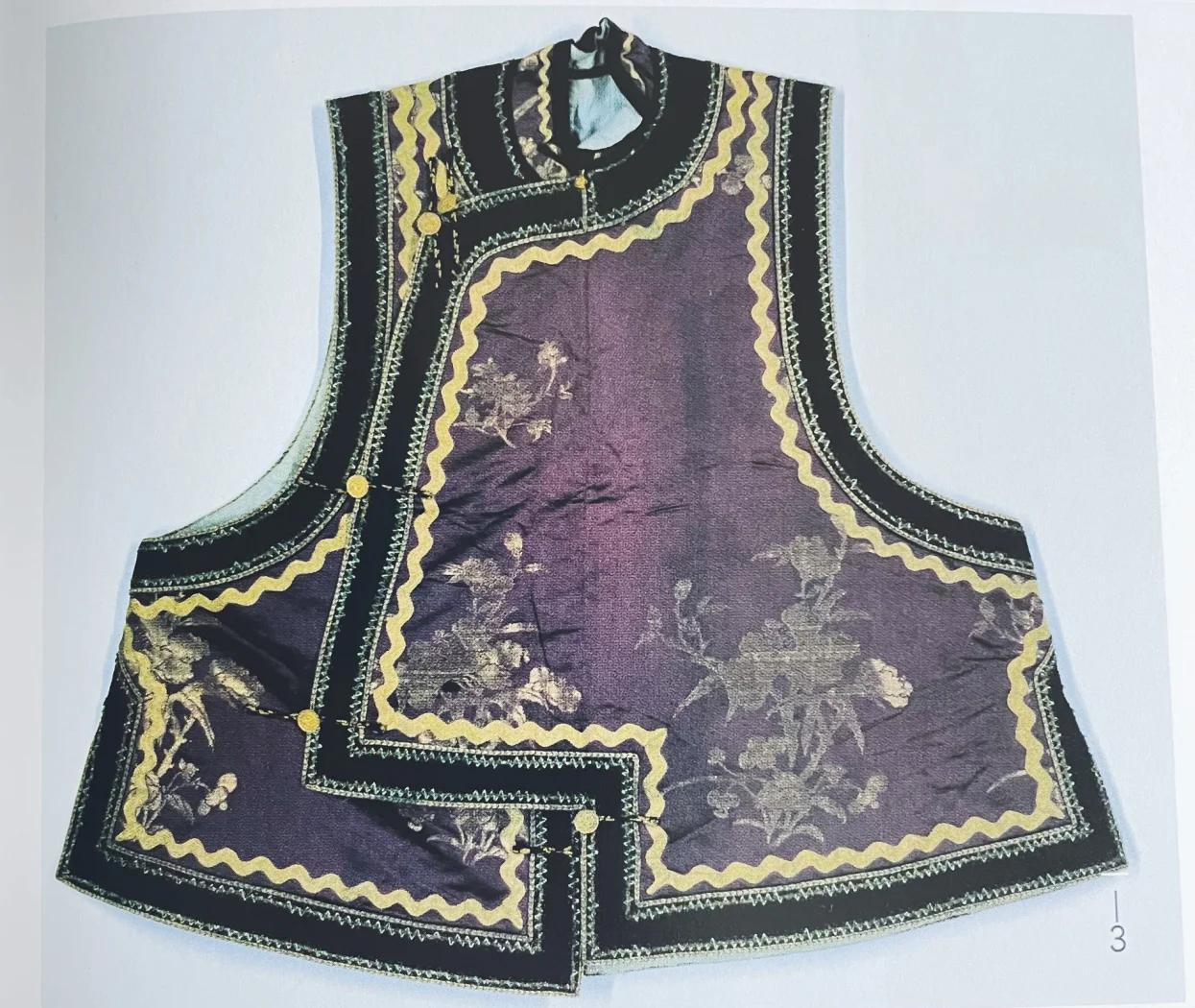
The Qing's legacy is everywhere in modern China, though it is rarely acknowledged as Manchu. The qipao — the form-fitting dress that the world recognizes as quintessentially Chinese — is a Manchu garment, derived from the long robes worn by Banner women. The borders of the modern People's Republic largely follow Qing territorial claims. The Manchu-style banquet, with its elaborate sequence of cold dishes, hot dishes, and sweets, became the template for formal Chinese dining. Saqima (萨其马), the honey-glazed pastry found in every Chinese bakery, is a Manchu confection. The shamanic traditions of the Manchu — spirit poles in courtyards, ancestor worship at family shrines — left traces in folk religious practice across the north.
Yet the Manchu language — once the administrative tongue of the empire, the language in which treaties with Russia were written — is functionally extinct. Centuries of intermarriage, the abolition of the Banner system after 1911, and the social pressures of the twentieth century dissolved Manchu linguistic identity almost completely. Today, Manchu identity persists primarily as genealogical memory: families who know their banner affiliation, who maintain certain culinary and ritual traditions, who carry the surname traces of their ancestry. It is identity as palimpsest — visible only to those who know how to read the layers.
The Hui: China's Muslim Heartland
The Hui are unique among China's minorities in one crucial respect: they are everywhere. While other groups cluster in specific regions — the Dai in Xishuangbanna, the Tibetan on the plateau, the Mongol on the steppe — the Hui's eleven million members are distributed across every province, every major city, every trade route in China. You will find Hui communities in Beijing and Kunming, in Shanghai and Kashgar, in Harbin and Haikou. They are China's most geographically dispersed ethnic group, and this dispersion is itself a story — the story of Islam's thirteen-century journey through Chinese civilization.
The Hui trace their origins to Arab, Persian, and Central Asian merchants who arrived along the Silk Road and maritime trade routes during the Tang and Song dynasties. Over centuries, these Muslim traders intermarried with local Chinese women, adopted Chinese surnames, spoke Chinese — but maintained their faith. The result is a community that is, culturally, thoroughly Chinese and thoroughly Muslim simultaneously. A Hui family in Xi'an eats noodles with chopsticks, celebrates the Mid-Autumn Festival, and speaks the local Shaanxi dialect — and also prays five times a day, fasts during Ramadan, and refuses pork with an absoluteness that has defined their communal boundaries for a millennium.
The Ningxia Hui Autonomous Region, on the arid Ordos plateau, serves as the Hui's nominal homeland — though most Hui live far from it. Ningxia's mosques reveal the community's dual heritage: the Great Mosque of Tongxin, for instance, combines a traditional Chinese courtyard layout with Arabic calligraphic inscriptions and a domed prayer hall. The architecture is neither purely Chinese nor purely Islamic but something third — a visual theology of synthesis.
Hui cuisine — halal Chinese cooking — has become so pervasive that many Chinese diners do not realize they are eating in a Hui restaurant. The lanzhou lamian (hand-pulled noodle) shops that blanket every Chinese city are overwhelmingly Hui-owned. The cumin-spiced lamb, the beef noodle soups, the flatbreads baked in tandoor-like ovens — these are Hui contributions to the national palate. The Hui martial arts tradition, particularly chaquan and tanzitui, produced some of China's most celebrated fighters; the tradition of Hui bodyguards escorting merchant caravans through bandit territory is a staple of wuxia literature.
The Korean Chinese: Yanbian and Beyond
In the Yanbian Korean Autonomous Prefecture, tucked into the southeastern corner of Jilin Province where China meets North Korea and Russia, the street signs are bilingual — Chinese above, Korean below. The restaurants serve naengmyeon (cold buckwheat noodles in icy broth) and dogjang (fermented soybean paste). Grandmothers in pastel hanbok gather in parks on holidays. The long drum (janggu) beats at weddings. Approximately two million Korean Chinese live in China, with the densest concentration here in Yanbian, though significant communities exist in Shenyang, Harbin, and Beijing.
Korean migration into Manchuria began in earnest in the late nineteenth century, driven by famine and Japanese colonial pressure in the Korean Peninsula. By the 1930s, hundreds of thousands of Koreans had settled the fertile river valleys of southern Manchuria, establishing rice paddies in a region where the crop had previously been unknown. After 1949, these communities were incorporated into the People's Republic as a recognized minority, and Yanbian was designated their autonomous prefecture in 1952.
Korean Chinese culture maintains a fierce emphasis on education — a Confucian inheritance shared with the Korean Peninsula but intensified by the minority experience. Yanbian's schools are bilingual; its university, Yanbian University, teaches in both Chinese and Korean. The community's cross-border family connections — relatives in South Korea, in Japan, in the United States — create a transnational web that makes Yanbian feel, culturally, like a borderland in the truest sense: belonging fully to China, yet oriented also toward Seoul and Busan. The long drum dance, the swing-riding festivals, the kimchi-making traditions passed from mother to daughter — these persist, adapted but unbroken, in their new Chinese soil.
The Daur, Ewenki, and Oroqen: Forest Peoples of the Northeast
Beyond the farmland of the Manchurian plain, where the Songhua and Nen rivers wind through black-earth country, the land rises into the Greater and Lesser Khingan mountain ranges. Here, in the boreal forest — the taiga of larch and birch — live three peoples whose cultures were shaped not by agriculture but by the hunt, the river, and the reindeer.
The Daur (approximately 130,000) are the most numerous of the three, historically settled along the Nonni River. They practiced a mixed economy of farming, fishing, and hunting, and their oral literature — the Uqin narrative poems — preserves epic tales of ancestral heroes. Daur women's embroidery, featuring bold floral and geometric motifs, is a recognized intangible heritage tradition.
The Ewenki (approximately 30,000) are reindeer people. In the forests around Genhe, in Inner Mongolia's far north, a small community of Ewenki herders still maintains semi-nomadic reindeer camps — the last reindeer-herding culture in China. Their birch-bark crafts — canoes, containers, cradles — represent a technology perfectly adapted to the forest environment. Ewenki shamanism, with its elaborate spirit costumes and drum ceremonies, was suppressed during the twentieth century but has seen cautious revival.
The Oroqen (approximately 9,000) are among China's smallest ethnic groups. Until the 1950s, they lived as nomadic hunters in the Greater Khingan forests, following roe deer and elk through the seasons, dwelling in xierenzhu — conical tents of birch bark and hide. Their forced settlement into permanent villages during the socialist period preserved their lives but severed their relationship with the forest. Today, Oroqen cultural revival focuses on language documentation, traditional craft workshops, and the annual Guluomuren Festival, which celebrates their hunting heritage with horse racing, archery, and storytelling.
For all three peoples, the central challenge is the same: how do you preserve a forest-based culture when the forest is logged, the game is scarce, and the young people want smartphones and city jobs? The answer, imperfect and ongoing, involves cultural tourism, heritage documentation, and the stubborn pride of elders who still speak the old languages and remember the old ways.
The Kazakh, Kirgiz, and Tajik: Peoples of the Western Frontier
Turn westward, beyond the Gansu Corridor, beyond the Taklamakan's southern rim, to the high pastures and mountain valleys of Xinjiang's north and west. Here, the ethnic landscape shifts again — from the Turkic Uyghur culture of the Tarim Basin oasis cities to the pastoral nomadism of the Tianshan and Altai ranges.
The Kazakh (approximately 1.5 million in China) are the second-largest group in Xinjiang. Their culture is the culture of the steppe and the high summer pasture: felt yurts, horseback migration, the fermented mare's milk (kumiss) that sustains herders through long seasons. Kazakh oral poetry — the aytes, improvised verse duels between rival poets — is a tradition of extraordinary verbal virtuosity. Their felt-making, producing the patterned syrmak rugs that insulate yurt floors, is an art form passed from mother to daughter across generations.
The Kirgiz (approximately 200,000 in China), concentrated around the Pamir plateau in Xinjiang's far west, are renowned eagle hunters. The tradition of training golden eagles to hunt foxes and hares on the open steppe — a practice stretching back over two thousand years — persists among Kirgiz communities in the Taxkorgan region. The annual eagle hunting festival draws competitors whose birds, hooded and fierce, launch from their masters' arms with a wingspan exceeding two meters. The Kirgiz also preserve the Manas epic, a half-million-line oral poem recounting the hero Manas's battles — one of the longest narrative poems in human history.
The Tajik (approximately 50,000 in China) are unique: they are the only Iranian-speaking ethnic group in China. Their language, Sarikoli, is related to the Pamiri languages of Tajikistan and Afghanistan — an Indo-European tongue surrounded by Turkic and Chinese speakers. Living in the high valleys around Taxkorgan, at elevations above 3,000 meters, the Tajik maintain a pastoral economy and a distinctive musical tradition built around the nay (bone flute) and the daf (frame drum). Their eagle dance, performed at weddings and festivals, mimics the flight of the golden eagle with outstretched arms and soaring turns.
The Xibe and the Tu: Garrison Descendants and Rainbow Sleeves
Two smaller peoples bookend this northern journey, each with a story that could not be more different — yet both illustrating how history deposits human communities in unexpected places.
The Xibe (approximately 190,000) live primarily in Qapqal County, in Xinjiang's Ili Valley — thousands of kilometers from their ancestral homeland in Manchuria. How did they arrive? In 1764, the Qing government ordered a garrison of Xibe soldiers and their families to march from Shenyang to the Ili frontier, a journey of over 5,000 kilometers on foot and by oxcart. They arrived, established their military colony, and stayed. For 260 years, the Xibe of Qapqal preserved their language — a form of Manchu — more completely than the Manchu themselves, insulated by distance from the assimilation pressures of the northeast. Their annual Xibe Westward Migration Festival, commemorating the 1764 departure, is a celebration of endurance: the community remembers the ancestors who walked across a continent and never came home.
The Tu (also called Monguor, approximately 290,000) live in Qinghai and Gansu, in the transition zone between the Tibetan plateau and the Loess Plateau. They are a Mongolic-speaking people with a distinctive cultural identity blending Mongol, Tibetan, and Chinese elements. Their most visually striking tradition is the rainbow-sleeved robe (彩虹袖) worn by women — a garment whose sleeves display seven bands of color, each representing a natural element: black for earth, green for grass, blue for sky, white for clouds, red for sun, yellow for harvest, and orange for gold. The Nadun Festival, held in autumn after the harvest, is a weeks-long celebration of song, dance, and masked drama performed village by village in a rotating circuit — a tradition sometimes called the world's longest carnival.
From the Manchu palaces of Shenyang to the Xibe garrison of Qapqal, from the Hui mosques of Xi'an to the Ewenki reindeer camps of Genhe, from the Korean kitchens of Yanbian to the Tajik eagle hunts of Taxkorgan — northern China's ethnic peoples are not relics. They are not museum exhibits or festival performances staged for tourists. They are living communities, negotiating modernity on their own terms, carrying forward languages and faiths and crafts and songs that predate the nation-state by centuries. They are the proof that China's story has never been told by one voice alone. It is a chorus — vast, sometimes discordant, always rich. And the northern voices, deep and resonant, give it gravity.